- English
- Español
- Português
- русский
- Français
- 日本語
- Deutsch
- tiếng Việt
- Italiano
- Nederlands
- ภาษาไทย
- Polski
- 한국어
- Svenska
- magyar
- Malay
- বাংলা ভাষার
- Dansk
- Suomi
- हिन्दी
- Pilipino
- Türkçe
- Gaeilge
- العربية
- Indonesia
- Norsk
- تمل
- český
- ελληνικά
- український
- Javanese
- فارسی
- தமிழ்
- తెలుగు
- नेपाली
- Burmese
- български
- ລາວ
- Latine
- Қазақша
- Euskal
- Azərbaycan
- Slovenský jazyk
- Македонски
- Lietuvos
- Eesti Keel
- Română
- Slovenski
- मराठी
- Srpski језик

How Does Gray Iron Casting Impact Industrial Manufacturing?
Abstract: Gray iron casting is a crucial manufacturing method widely used in the industrial sector due to its strength, durability, and cost-effectiveness. This article explores the manufacturing process, material properties, applications, and common questions related to gray iron casting. Detailed technical parameters are provided for professional reference, along with expert insights into optimizing production efficiency.
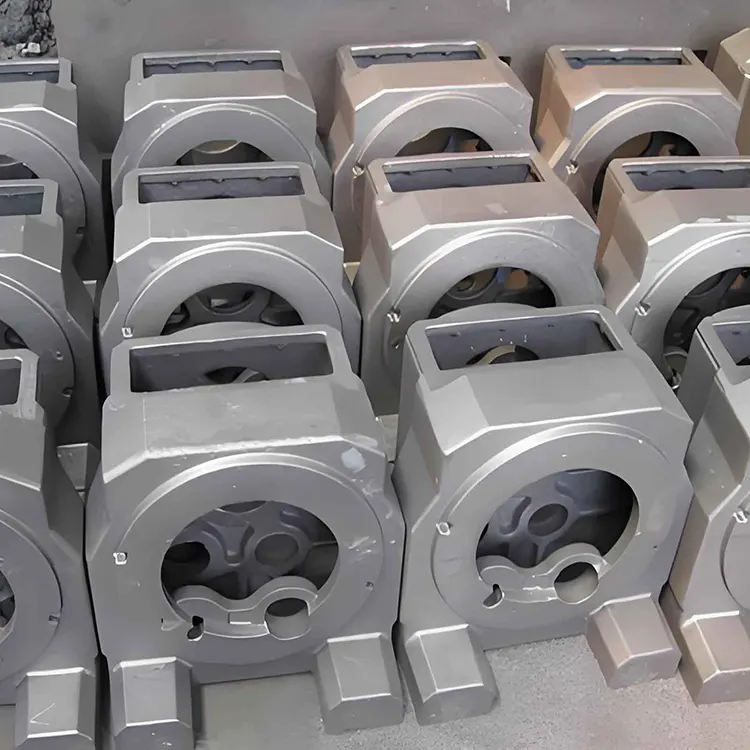
Table of Contents
1. Introduction to Gray Iron Casting 2. Technical Specifications 3. Applications of Gray Iron Casting 4. Common Questions about Gray Iron Casting 5. Conclusion and Contact
1. Introduction to Gray Iron Casting
Gray iron casting refers to the process of creating components using gray cast iron, a type of cast iron known for its unique graphite microstructure. This material provides excellent compressive strength, vibration damping, and machinability, making it ideal for automotive, machinery, and industrial equipment applications. Understanding the precise properties and manufacturing process of gray iron casting allows engineers and manufacturers to achieve higher performance standards in their products.
The central focus of this article is to provide an in-depth technical overview of gray iron casting, including its production processes, material properties, and common challenges. By exploring these aspects, professionals can make informed decisions about material selection and casting techniques.
2. Technical Specifications of Gray Iron Casting
The following table presents key parameters of gray iron casting typically used in industrial applications:
| Parameter | Specification |
|---|---|
| Material Composition | Carbon 2.5-4%, Silicon 1-3%, Manganese 0.5-1%, Sulfur ≤0.1%, Phosphorus ≤0.2% |
| Density | 6.8 - 7.3 g/cm³ |
| Compressive Strength | 150 - 450 MPa |
| Tensile Strength | 130 - 300 MPa |
| Hardness | 170 - 250 HB |
| Thermal Conductivity | 40 - 60 W/m·K |
| Applications | Engine blocks, machine bases, pump housings, valve bodies, industrial equipment |
3. Applications of Gray Iron Casting
Gray iron casting is extensively used in various industries due to its mechanical and thermal properties. Key application areas include:
3.1 Automotive Industry
Engine blocks, cylinder heads, brake discs, and other automotive components utilize gray iron for its strength, vibration absorption, and wear resistance. The graphite microstructure reduces thermal expansion and improves component longevity.
3.2 Machinery and Industrial Equipment
Gray iron is widely employed in machinery frames, bases, housings, and gears. Its vibration damping characteristics make it ideal for precision machines and heavy industrial equipment where stability is critical.
3.3 Pump and Valve Manufacturing
Pumps, valves, and related equipment benefit from gray iron’s corrosion resistance and machinability. Castings can be easily shaped into complex geometries, ensuring precise fits and reliable operation.
3.4 Construction and Infrastructure
Gray iron components such as pipe fittings, manhole covers, and structural elements are commonly used in construction projects. The material’s durability and cost-effectiveness make it a preferred choice for large-scale infrastructure projects.
4. Common Questions about Gray Iron Casting
Q1: What makes gray iron casting different from other types of cast iron?
A1: Gray iron casting is distinguished by its flake graphite microstructure, which provides excellent compressive strength, thermal conductivity, and vibration damping. Unlike ductile iron, which has nodular graphite, gray iron is more brittle but easier to machine and more cost-effective for many industrial applications.
Q2: What are the typical challenges in gray iron casting?
A2: Common challenges include controlling shrinkage, preventing porosity, and achieving uniform cooling rates to maintain mechanical integrity. Proper mold design, temperature management, and post-casting treatments are critical to overcoming these challenges.
Q3: How can gray iron casting be optimized for high-precision applications?
A3: Optimization involves selecting the correct alloy composition, controlling graphite size and distribution, using precise mold design techniques, and implementing appropriate heat treatment processes. Advanced simulation tools and quality control measures also help ensure dimensional accuracy and material performance.
5. Conclusion and Contact
Gray iron casting remains a cornerstone of industrial manufacturing due to its versatility, mechanical properties, and cost-effectiveness. Professionals seeking high-quality castings can rely on established manufacturers such as Difon Machinery for expert solutions in design, production, and customization. For inquiries or to discuss project requirements, please contact us to connect with our team of casting specialists.