- English
- Español
- Português
- русский
- Français
- 日本語
- Deutsch
- tiếng Việt
- Italiano
- Nederlands
- ภาษาไทย
- Polski
- 한국어
- Svenska
- magyar
- Malay
- বাংলা ভাষার
- Dansk
- Suomi
- हिन्दी
- Pilipino
- Türkçe
- Gaeilge
- العربية
- Indonesia
- Norsk
- تمل
- český
- ελληνικά
- український
- Javanese
- فارسی
- தமிழ்
- తెలుగు
- नेपाली
- Burmese
- български
- ລາວ
- Latine
- Қазақша
- Euskal
- Azərbaycan
- Slovenský jazyk
- Македонски
- Lietuvos
- Eesti Keel
- Română
- Slovenski
- मराठी
- Srpski језик
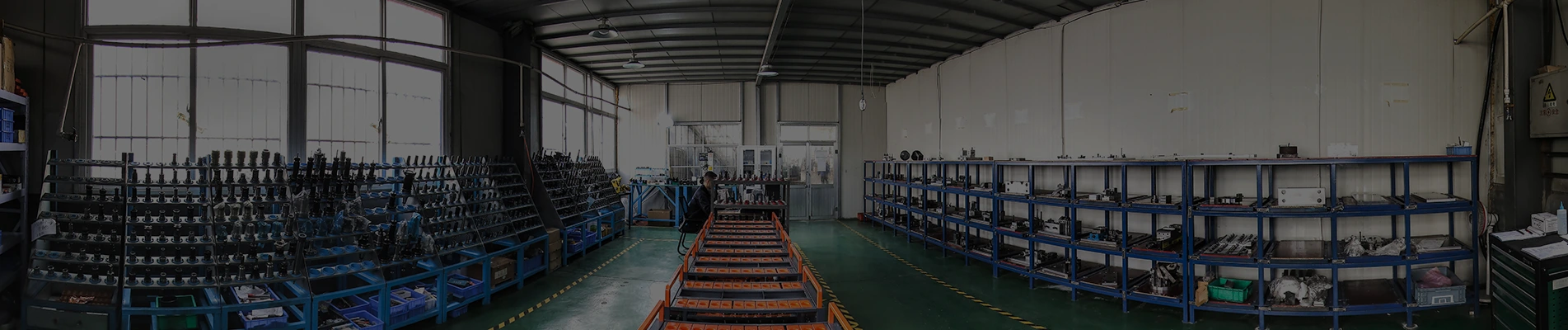
China Hydraulic Components Manufacturer, Supplier, Factory
Difon is a focused China hydraulic components manufacturer with good skills making top-quality hydraulic parts. These parts meet strict industry rules for accuracy, strength and dependability in tough uses.
Making hydraulic component brings special challenges that need specific skills. Complex inner shapes need to be cut very accurately to make fluid flow well and stop leaks. Choosing the right material is key – parts must handle high pressure over time and not wear out or rust. How smooth the surface is affects how well seals work and how long parts last. At Difon we solve these challenges with good machining methods made just for hydraulic components uses – this includes special ways to make Hydraulic Manifold Valve Bodies and Hydraulic Valve Blocks.
Our way of making parts uses key steps to keep components reliable:
·Precision deep-hole drilling:Make straight smooth fluid paths in Hydraulic Manifold Valve Bodies – length is over 20 times the diameter and keep positions accurate
·Multi-axis contouring: Cut complex port shapes and mounting surfaces on Hydraulic Valve Blocks with small error margins only ±0.01mm
·High-pressure surface finishing: Make sealing surfaces smoother using special grinding and honing
·Clean production: Use strict cleaning steps to stop dirt that might damage hydraulic system safety
These methods make sure our hydraulic components work well all the time even in tough uses from industrial machines to mobile gear.
|
Manufacturing Process |
Technical Specifications |
Quality Assurance Methods |
|
Deep-Hole Drilling |
Diameter range: 3-50mm, Depth: up to 1000mm, Straightness: 0.1mm/100mm |
Bore scoping, surface roughness testing, pressure testing |
|
Multi-Axis CNC Machining |
Tolerance: ±0.005mm, Positional accuracy: ±0.005mm, Surface finish: Ra 0.2-0.8μm |
CMM verification, prototype testing, statistical process control |
|
Port and Thread Machining |
SAE, JIC, NPT, BSPP thread standards, Cross-port deburring |
Thread gauge inspection, air pressure testing, flow testing |
|
Heat Treatment & Surface Engineering |
Nitriding, Hard chrome plating, Phosphate coating |
Hardness testing, coating thickness verification |
What materials are suitable for precision machining in hydraulic components applications?
·Carbon Steels: For general industrial applications requiring good strength and machinability
·Alloy Steels: Providing enhanced strength and durability for high-pressure systems
·Stainless Steels: Offering superior corrosion resistance for harsh environments
·Aluminum Alloys: Delivering excellent weight-to-strength ratios for mobile equipment
Each material undergoes specific machining parameter optimization to achieve the required dimensional stability and surface integrity while minimizing residual stresses that could affect component performance under cyclic loading conditions.
Products
- View as

Hydraulic Valve Block
Manufacturers that make agricultural machinery, mining equipment, and industrial hydraulic systems often need reliable hydraulic valve blocks. These blocks hold multiple valve ports, control fluid flow, and keep system pressure steady. Difon Machinery Co., Ltd. is a professional factory that makes custom hydraulic valve blocks.
Read MoreSend Inquiry
Accumulator Charging Valve
In the fields of construction machinery, industrial automation, and heavy equipment manufacturing, the need for high-precision hydraulic components is constant. These parts are essential for leak-free fluid control and reliable system operation. Difon Machinery Co., Ltd. is a trusted manufacturer of custom accumulator charging valve. We specilized in producing these critical components from raw casting to finished precision machining. We achieve tight dimensional tolerances down to 0.005mm and internal bore tolerances to 0.002mm. This level of accuracy addresses major challenges in hydraulic design: it eliminates internal leakage, ensures straight and true internal passages, and builds the strength needed to withstand high operating pressures. When you partner with Difon for a custom accumulator charging valve body, you get more than just a parts supplier.
Read MoreSend Inquiry
Brake Proportioning Valve
As a OEM brake proportioning valve manufacturer, Difon provides high-precision solutions including the brake proportioning valve and complex hydraulic valve body components for global industrial leaders. In any heavy-duty hydraulic system, the valve is the heart of the operation. If the casting is weak or the machining is off by even a hair, the whole system risks failure. At Difon, we solve this by combining refined casting techniques with high precision CNC machining to deliver parts that simply don't fail in the field.
Read MoreSend Inquiry

Charging Valve
Difon's total solution for charging valve custom manufacturing, from blanks to surface treatment after machining. Total solution ensures IATF 16949 quality and high pressure resistance for manufacturers of equipment. Get quote!
Read MoreSend Inquiry
Hydraulic Manifold Machining
Finding a reliable Hydraulic Manifold Machining manufacturer often comes down to one word: trust. At Difon, we serve as a high-quality supplier and wholesale partner for global industries that cannot afford mechanical failure. Since 2014, our 14,000-square-meter facility has focused on one goal—achieving perfection in metal.
Read MoreSend Inquiry
Difon is a professional Hydraulic Components manufacturer and supplierin China, We warmly welcome you to wholesale high-quality products at competitive price from our factory.