- English
- Español
- Português
- русский
- Français
- 日本語
- Deutsch
- tiếng Việt
- Italiano
- Nederlands
- ภาษาไทย
- Polski
- 한국어
- Svenska
- magyar
- Malay
- বাংলা ভাষার
- Dansk
- Suomi
- हिन्दी
- Pilipino
- Türkçe
- Gaeilge
- العربية
- Indonesia
- Norsk
- تمل
- český
- ελληνικά
- український
- Javanese
- فارسی
- தமிழ்
- తెలుగు
- नेपाली
- Burmese
- български
- ລາວ
- Latine
- Қазақша
- Euskal
- Azərbaycan
- Slovenský jazyk
- Македонски
- Lietuvos
- Eesti Keel
- Română
- Slovenski
- मराठी
- Srpski језик
Products




Deformation-Free Welding
Difon Machinery Co., Ltd. is a leading deformation-free welding factory, offering high-precision, medical-grade welding solutions for critical healthcare components plus follow-up precision machining. Our Difon deformation-free welding technology is built specifically for medical devices—surgical instruments, diagnostic equipment housings, implantable component frames—making sure there’s no dimensional distortion, seamless joint strength, and compliance with strict medical standards.
Send Inquiry
Product Description
Precision Deformation-Free Welding for Medical Devices – Difon’s Specialized Manufacturing Capability
Difon Machinery Co., Ltd. is a leading deformation-free welding factory, offering high-precision, medical-grade welding solutions for critical healthcare components plus follow-up precision machining. Our Difon deformation-free welding technology is built specifically for medical devices—surgical instruments, diagnostic equipment housings, implantable component frames—making sure there’s no dimensional distortion, seamless joint strength, and compliance with strict medical standards. We provide a one-stop solution that turns raw medical-grade materials into ready-to-assemble parts. This eliminates the risk of post-weld rework or misalignment. As your partner, you gain access to a team that shares your understanding of the life-critical nature of medical components, balancing technical precision with biocompatibility and sterilization resistance. Whether you need 5 prototypes for clinical checks or 500 plus batch parts for mass-produced medical devices, we’ve got you covered.
In the medical device industry, even tiny deformation in welded parts can lead to catastrophic results. A surgical forceps with a warped jaw joint might not grip tissue securely during procedures, endangering patients. A diagnostic ultrasound probe housing with distorted welds could break its waterproof seal, letting sterilization fluids seep into internal electronics and cause equipment failure. Many welding suppliers can’t control thermal expansion in thin medical materials. They use basic welding methods that put speed ahead of precision. At Difon, we fix these issues with a special deformation-free welding process that reduces heat-affected zones and maintains components’ original sizes. The process begins with a comprehensive design analysis, where we evaluate material properties, joint geometry, and intended use to define welding parameters that proactively prevent warping, bending, or shrinkage. Many of our medical device clients have said this careful planning saves them from costly post-welding adjustments. For example, a titanium alloy surgical instrument handle uses pulse laser welding with microsecond heat pulses to keep the part’s shape perfect.This fuses the joint without heating the surrounding material above 200℃, preserving both dimensional accuracy and the material’s biocompatibility.
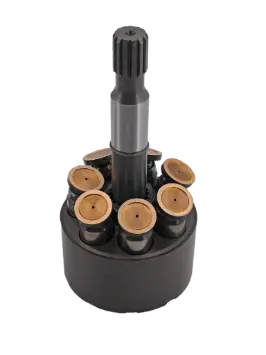
Our Difon deformation-free welding strength comes from advanced welding technologies and strict process control, each tailored to medical-grade materials’ unique needs. We only use biocompatible materials approved for medical use: 316L stainless steel for corrosion resistance, Ti-6Al-4V ELI titanium and medical-grade cobalt-chromium alloys for implantable parts. The table below shows our key material-welding pairs and the specialized techniques for zero deformation:
|
Medical-Grade Material |
Welding Technology of Choice |
Target Medical Applications |
|
316L Stainless Steel |
Pulsed Gas Tungsten Arc Welding (TIG) |
Surgical instrument jaws, endoscope housings |
|
Ti-6Al-4V ELI Titanium |
Fiber Laser Welding |
Implantable component frames, surgical robot arms |
|
Cobalt-Chromium Alloy |
Micro Plasma Arc Welding |
Orthopedic implant bases, dental tool components |
Our Difon deformation-free welding workflow is a carefully planned sequence with no room for error. Before welding, we prepare each component with micro-precision: joint surfaces are ground to a Ra ≤ 0.2μm finish for perfect contact. Custom heat-resistant ceramic fixtures hold parts in place with 2–5kN clamping force—enough to prevent movement without damaging the delicate material. For complex components with multiple joints such as a multi-part diagnostic device frame, we use sequential welding that alternates between joints to spread heat evenly and prevent local thermal buildup. Our clients in diagnostic device manufacturing often praise this method for keeping their parts in perfect shape—no more warping from uneven heat. While welding, we use infrared thermal imaging cameras to monitor heat-affected zones in real time, a methodology that proactively prevents heat-related defects. If the temperature goes over the material’s safe limit, the system will automatically adjust the welding pulse duration or pause to let it cool down. This level of control has helped us maintain a near-perfect success rate for these tricky components, deemed critical by our long-term partners. This level of control ensures even after multiple welds, the component’s dimensions stay within ±0.005mm of the original design—far tighter than the ±0.02mm tolerance usually accepted in medical manufacturing.
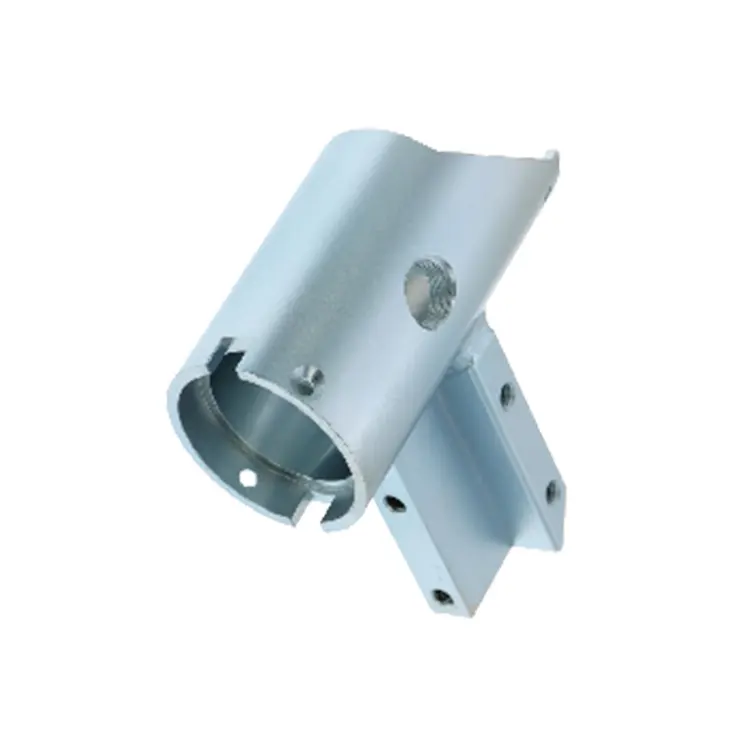
As a full-service deformation-free welding factory, we offer more than just welding—we provide precision machining that complements our deformation-free joints. Medical components often need complex details like micro-holes for fluid flow, threaded connections for assembly and smooth surfaces for sterilization. Our in-house machining adds these details without harming the welded structure. We use super-precise five-axis CNC machining centers with 0.001mm repeat accuracy to mill, drill and grind welded parts. For example, a titanium surgical robot arm joint welded with fiber laser goes through CNC grinding to get a Ra 0.1μm or better surface finish, ensuring smooth movement and resistance to wear from repeated sterilization. A surgical device client once told us this smooth finish cut their sterilization-related maintenance by half. We also use non-abrasive deburring methods such as electrochemical deburring to remove micro-burrs from weld joints, stopping bacterial growth and keeping patients safe. This extra care in deburring has helped many of our clients pass strict medical safety audits without any issues.Quality control for our Difon deformation-free welding process is unmatched, reflecting medical devices’ critical nature. We use a three-tier inspection protocol that starts right after welding: we first scan each component with a coordinate measuring machine (CMM) with 100,000 3D points per square centimeter, comparing every feature to the original CAD file—we specifically measure key dimensions prone to deformation, such as joint parallelism, hole position, and overall flatness, to meet the ±0.005mm tolerance. Next, we inspect 100% of weld joints with advanced non-destructive testing (NDT): ultrasonic testing (UT) for internal micro-cracks, X-ray computed tomography (CT) for complex internal joints, and liquid penetrant testing (PT) for surface defects invisible to the naked eye. Finally, for components that touch patients or sterile environments. We subject samples to autoclaving and ethylene oxide (EO) sterilization before re-inspecting for dimensional stability and joint integrity—making sure the component performs reliably throughout its service life. Every finished part has a unique serial number linked to a digital quality record that documents the entire production journey, from material batch certificates and welding parameters to machining logs and inspection results. This traceability extends beyond compliance; it embodies our commitment to transparency, providing you with verifiable quality assurance for every component. Many of our medical clients say this level of openness makes their compliance checks way easier and saves them time during audits.
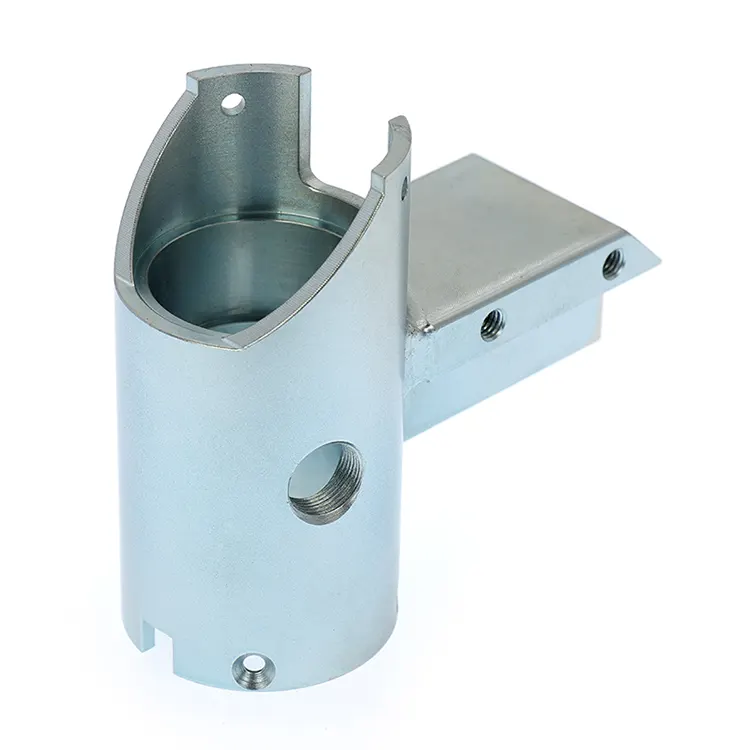
What makes Difon different as a deformation-free welding factory is our good grasp of medical device development timelines and regulatory rules. Lots of clients come to us with early-stage designs that need small changes to work with deformation-free welding.
Our engineering team works with yours to refine joint geometry, suggest material swaps like switching from stainless steel to titanium for better weldability, and make sure the design meets both performance and regulatory needs. For example, we recently worked with a diagnostic equipment maker to redesign an ultrasound probe housing—changing the joint from lap weld to butt weld to minimize heat input and eliminate potential deformation points, all while keeping the housing’s waterproof rating intact.
We also offer rapid prototyping to speed up your product launch: using our small-batch welding and machining capabilities, we can make 3–5 prototype components in 7–10 business days, letting you do clinical testing and design validation without delay. For large-volume orders, we optimize our production line with automated material handling and statistical process control (SPC), ensuring consistent quality across thousands of units. Our customer support team has medical device experts ready to help with regulatory paperwork things like Device Master Records and Quality System Regulations and give technical tips for installation, sterilization and maintenance. Many clients have told us this expert help cuts down the time they spend on regulatory tasks—one diagnostic device maker even said we saved them nearly a month of paperwork hassle during their FDA approval process.
At Difon Machinery Co., Ltd., we believe deformation-free welding for medical devices is more than a production method it’s our duty to protect patient safety and push healthcare innovation forward. As your trusted deformation-free welding factory, our mix of specialized welding tech, precision machining, tight quality checks and regulatory know-how ensures every component we make meets the highest performance and reliability standards. Whether you’re developing a new surgical tool, diagnostic device or implantable part, we’re ready to turn your requirements into deformation-free, medical-grade components that save lives and improve patient results. Reach out to our team today to talk about your project, ask for a biocompatibility test report or set up a facility visit. You’ll see our deformation-free welding stations and medical device quality labs in action and soon understand why so many medical device makers count on us for their most critical parts.
Hot Tags: Deformation-Free Welding
Related Category
Aluminum Die-Casting
Casting Process
Sheet Metal Fabrication
Stamping Processing
Welding Process
Precision Machining
Send Inquiry
Please feel free to give your inquiry in the form below. We will reply you in 24 hours.


