- English
- Español
- Português
- русский
- Français
- 日本語
- Deutsch
- tiếng Việt
- Italiano
- Nederlands
- ภาษาไทย
- Polski
- 한국어
- Svenska
- magyar
- Malay
- বাংলা ভাষার
- Dansk
- Suomi
- हिन्दी
- Pilipino
- Türkçe
- Gaeilge
- العربية
- Indonesia
- Norsk
- تمل
- český
- ελληνικά
- український
- Javanese
- فارسی
- தமிழ்
- తెలుగు
- नेपाली
- Burmese
- български
- ລາວ
- Latine
- Қазақша
- Euskal
- Azərbaycan
- Slovenský jazyk
- Македонски
- Lietuvos
- Eesti Keel
- Română
- Slovenski
- मराठी
- Srpski језик

Why Advanced Precision Machining is Essential for High-Accuracy Robot Parts?
In modern robotics, every component must meet exact tolerances to ensure consistent performance and reliability. Advanced Precision Machining plays a central role in producing parts that meet these demanding standards. Our team focuses on controlling dimensional accuracy, surface finish, and material consistency. At our factory, we closely monitor every stage of the production process to deliver robot parts that maintain performance over time. When engineers select precision machining solutions from our catalog, they are investing in long-term reliability and efficiency.
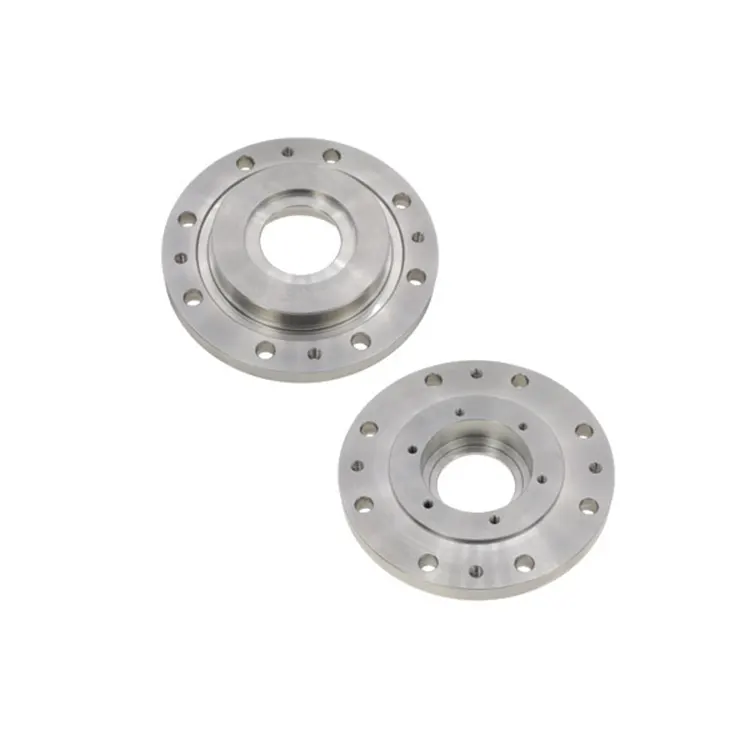
How Does Precision Machining Affect Robot Kinematics and Performance?
The alignment and movement of robotic arms depend on the accuracy of each mechanical component. Any deviation, even at micron levels, can accumulate and affect overall kinematics. Our factory employs multi-axis CNC machines capable of achieving tolerances below 5 microns. Qingdao Difon Machinery Co., Ltd. integrates real-time inspection and coordinate measuring systems into the workflow, ensuring that each part performs as expected. By focusing on precision machining, we guarantee parts that reduce backlash and maintain consistent motion control.
The following table illustrates common robotic part types, their tolerances, and recommended machining methods.
| Part Type | Typical Tolerance | Recommended Machining Method | Notes |
| Robotic Arm Joint | ±5 microns | 5-axis CNC milling | Ensures smooth rotation and minimal backlash |
| End-Effector Plate | ±10 microns | Precision turning | Maintains alignment for tooling attachments |
| Gear Assemblies | ±3 microns | Grinding and micro-milling | Critical for transmission efficiency |
Why Material Selection and Surface Finish Matter in Precision Machining?
The choice of material directly influences wear resistance, weight, and thermal expansion characteristics of robot components. Our factory evaluates metals like stainless steel, aluminum alloys, and titanium for specific robotic applications. We also control surface finishes using advanced grinding, polishing, and coating methods to reduce friction and increase component life. When engineers request Precision Machining from our production line, they can select materials and finishes optimized for load-bearing, heat resistance, and motion stability. Qingdao Difon Machinery Co., Ltd. ensures that every material batch meets stringent mechanical and chemical standards.
Surface roughness, measured in Ra microns, is a key factor for component longevity. The table below demonstrates typical finishes for common robot parts and their impact on performance.
| Component | Surface Roughness (Ra) | Impact on Performance | Recommended Treatment |
| Joint Bearings | 0.2–0.4 | Reduces friction and wear | Precision grinding and polishing |
| Gear Teeth | 0.5–0.8 | Maintains smooth engagement | Micro-milling and deburring |
| End-Effector Contact Surfaces | 0.8–1.2 | Improves repeatability in tool handling | Polishing and coating |
How Does Machining Precision Influence Assembly and Maintenance?
High-accuracy robot parts require tight fit tolerances during assembly. Loose fits can introduce play, while excessively tight fits may cause binding or premature wear. Our factory uses Precision Machining to produce components that align seamlessly during assembly. By maintaining consistent dimensions and high-quality finishes, we reduce the need for frequent maintenance and minimize operational downtime. Our engineers often provide technical support to ensure parts integrate smoothly with existing robotic systems.
Why Consistency and Repeatability Are Vital for Robotic Systems?
Robotics demands repeatable performance for tasks ranging from industrial automation to precision assembly. Any variance in part dimensions can propagate errors through the system. At our factory, we employ statistical process control and inline inspections to guarantee repeatability across batches. Difon tracks deviations in real-time and adjusts machining parameters as needed. Precision Machining ensures that every batch meets design specifications, allowing robotics engineers to predict performance accurately and avoid costly rework.
FAQ: Why Advanced Precision Machining is Essential for High-Accuracy Robot Parts?
What are the main benefits of advanced Precision Machining for robot parts?
Advanced Precision Machining ensures dimensional accuracy, optimal surface finish, and consistent material properties. This reduces mechanical errors, increases operational lifespan, and improves system repeatability, which is critical for robotic applications requiring high precision.
How does surface finish affect the performance of robotic components?
Surface finish directly impacts friction, wear, and heat generation. Smoother finishes on joints, gears, and contact surfaces reduce mechanical resistance, minimize energy loss, and extend part life. Selecting appropriate finishing techniques during Precision Machining is essential for maintaining reliable performance.
Why is material selection important alongside machining accuracy?
Material selection affects strength, thermal expansion, and resistance to environmental factors. Even precisely machined components will fail prematurely if the material is not suited to the operating conditions. Our factory evaluates both machining and material characteristics to ensure each robot part functions optimally.
Conclusion
Advanced Precision Machining is indispensable for producing high-accuracy robot parts. By combining precise dimensional control, careful material selection, and consistent surface finishes, manufacturers can ensure reliable operation and long-term performance. Our team continuously refines processes to deliver Precision Machining solutions that meet the most stringent robotic requirements. Qingdao Difon Machinery Co., Ltd. invites engineers and production managers to explore our capabilities and contact our technical team today for customized solutions that improve efficiency and reduce downtime.