- English
- Español
- Português
- русский
- Français
- 日本語
- Deutsch
- tiếng Việt
- Italiano
- Nederlands
- ภาษาไทย
- Polski
- 한국어
- Svenska
- magyar
- Malay
- বাংলা ভাষার
- Dansk
- Suomi
- हिन्दी
- Pilipino
- Türkçe
- Gaeilge
- العربية
- Indonesia
- Norsk
- تمل
- český
- ελληνικά
- український
- Javanese
- فارسی
- தமிழ்
- తెలుగు
- नेपाली
- Burmese
- български
- ລາວ
- Latine
- Қазақша
- Euskal
- Azərbaycan
- Slovenský jazyk
- Македонски
- Lietuvos
- Eesti Keel
- Română
- Slovenski
- मराठी
- Srpski језик

How Is Sheet Metal Fabrication Transforming Modern Manufacturing?
Modern manufacturing is undergoing continuous transformation driven by precision engineering, advanced automation, and increasing demand for customized industrial solutions. Among the most influential processes in this evolution, Sheet Metal Fabrication plays a central role in shaping structural components used across multiple industries. This process integrates cutting, forming, joining, and finishing techniques to create durable and highly functional metal assemblies that meet strict engineering requirements.
Industry Overview and Development Trends
The growing reliance on lightweight structures, improved mechanical performance, and efficient production cycles has elevated the importance of the Metal Fabrication in global industrial systems. Manufacturers are increasingly focusing on flexible production methods that allow rapid adaptation to design changes while maintaining consistent quality standards. As a result, engineering teams are investing more effort into digital modeling, precision tooling, and automated workflow systems that support scalable manufacturing operations.
In addition, the integration of advanced simulation technologies has improved product validation before physical production begins. This reduces material waste, shortens development cycles, and enhances structural reliability. Across transportation, energy systems, construction frameworks, and industrial equipment, the demand for refined metal components continues to expand, reinforcing the relevance of the Metal Fabrication in modern production ecosystems.
Core Engineering Processes
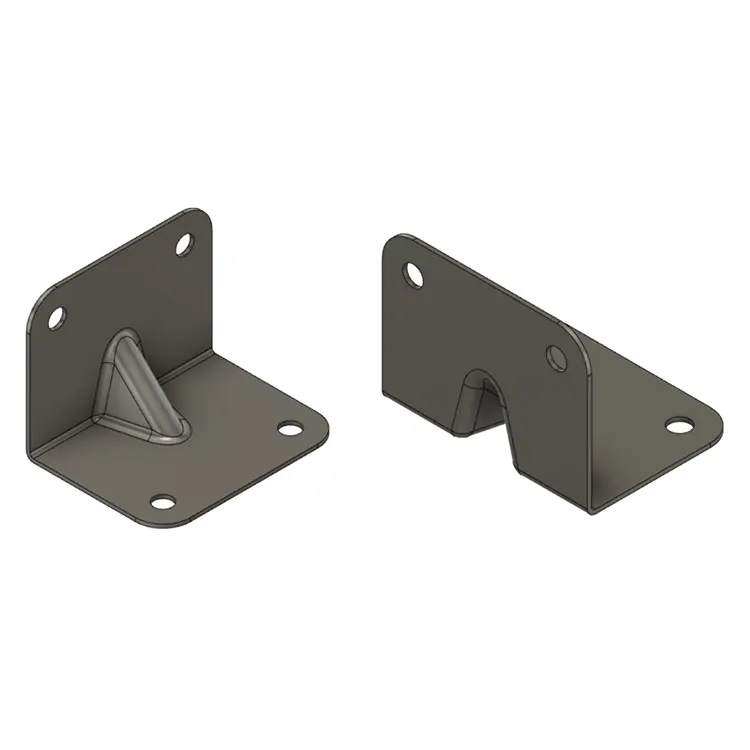
The foundation of industrial metal processing involves multiple coordinated steps that ensure both structural integrity and dimensional precision. Within this framework, Sheet Metal Fabrication is widely recognized for its versatility and adaptability across complex design requirements. It typically begins with material preparation, followed by precision cutting, controlled forming, accurate assembly, and surface refinement.
Cutting operations often rely on advanced methods designed to achieve smooth edges and consistent geometry. Forming techniques are applied to achieve specific angles, curves, and structural reinforcements without compromising material strength. Joining methods such as welding and fastening are carefully selected based on mechanical load requirements and environmental exposure conditions.
A critical aspect of this process is maintaining consistency throughout production cycles. Engineers closely monitor tolerances and alignment to ensure that each component meets strict design specifications. The evolution of automation in this field has significantly improved production stability, allowing manufacturers to maintain high efficiency while minimizing manual intervention.
In recent industrial applications, Sheet Metal Fabrication has also benefited from digital integration, where computer-aided design and machine-controlled execution work together to enhance precision. This synergy enables manufacturers to respond quickly to complex engineering demands while maintaining cost efficiency and structural reliability.
Material Engineering and Selection Principles
Material selection plays a decisive role in determining product performance and long-term durability. Engineers evaluate mechanical strength, corrosion resistance, thermal stability, and formability before selecting appropriate materials for fabrication processes. Different alloys and metal compositions are chosen depending on application environments and structural requirements.
Surface treatment techniques are also applied to enhance resistance against environmental stressors. Coating, polishing, and protective layering contribute to extended service life and improved aesthetic performance. These enhancements are particularly important in industries where exposure to moisture, temperature variation, and mechanical stress is frequent.
The adaptability of the Metal Fabrication allows engineers to work with a wide range of materials while maintaining consistent production quality. This flexibility supports innovation in product design and encourages the development of lightweight yet durable structures for modern industrial use.
Quality Control and Inspection Systems
Quality assurance is an essential component of industrial manufacturing, ensuring that each product meets established performance criteria. Inspection procedures include dimensional verification, surface evaluation, and structural integrity testing. These processes help identify potential deviations early in production, reducing the risk of operational failure.
Advanced measurement tools and digital inspection systems are widely used to enhance accuracy and repeatability. Engineers rely on standardized testing procedures to ensure consistency across production batches. Documentation and traceability also play a key role in maintaining transparency throughout manufacturing operations.
Within this context, the Metal Fabrication benefits significantly from structured quality frameworks that ensure each stage of production aligns with engineering specifications. Continuous monitoring and process optimization contribute to improved reliability and reduced production variability.
Industrial Applications and Use Cases
Metal fabrication technologies are widely applied across multiple industrial sectors, supporting the development of essential components and structural systems. These applications include transportation systems, energy infrastructure, machinery manufacturing, and architectural frameworks. Each application requires specific engineering considerations to ensure optimal performance.
In transportation systems, lightweight and durable components are essential for efficiency and safety. In energy-related industries, structural stability and resistance to environmental conditions are critical. Machinery production requires high precision and mechanical reliability to ensure long-term operational stability.
Sheet Metal Fabrication is frequently utilized in these environments due to its adaptability and precision. It enables the creation of complex geometries and functional structures that meet demanding industrial requirements. This versatility continues to drive its adoption across emerging technological fields.
Sustainability and Future Development
Sustainability has become a central focus in modern industrial development. Manufacturers are increasingly adopting resource-efficient processes that reduce material waste and energy consumption. Recycling and reuse of metal materials contribute to environmentally responsible production systems.
Technological advancements are also shaping the future of fabrication industries. Automation, robotics, and intelligent control systems are improving production accuracy while reducing operational costs. These innovations support the evolution of more sustainable and efficient manufacturing ecosystems.
As industries continue to evolve, the Metal Fabrication will remain a foundational process supporting innovation and structural development. Its ability to adapt to new technologies ensures its continued relevance in future industrial landscapes.
Company Strength and Industrial Commitment
Qingdao Difon Machinery Co., Ltd. is a specialized and innovative enterprise with strong capabilities in modern industrial manufacturing. The company focuses on aluminum die casting, sheet processing, stamping, welding, and machining, providing integrated solutions for global industrial partners. With a commitment to precision engineering and reliable production systems, the company continues to enhance its technological foundation and service capabilities.
Operating under the international brand Difon Baysun, the company extends its expertise to overseas markets, ensuring consistent quality and professional service standards. Its engineering team emphasizes process optimization, structural reliability, and continuous improvement across all production stages. Through sustained development, the company has established a strong reputation for integrity and technical competence.
In the field of advanced manufacturing, Sheet Metal Fabrication remains an essential capability that supports the company’s production framework. By integrating modern engineering techniques and strict quality management systems, Qingdao Difon Machinery Co., Ltd. delivers solutions that meet diverse industrial requirements while maintaining high standards of precision and durability.