- English
- Español
- Português
- русский
- Français
- 日本語
- Deutsch
- tiếng Việt
- Italiano
- Nederlands
- ภาษาไทย
- Polski
- 한국어
- Svenska
- magyar
- Malay
- বাংলা ভাষার
- Dansk
- Suomi
- हिन्दी
- Pilipino
- Türkçe
- Gaeilge
- العربية
- Indonesia
- Norsk
- تمل
- český
- ελληνικά
- український
- Javanese
- فارسی
- தமிழ்
- తెలుగు
- नेपाली
- Burmese
- български
- ລາວ
- Latine
- Қазақша
- Euskal
- Azərbaycan
- Slovenský jazyk
- Македонски
- Lietuvos
- Eesti Keel
- Română
- Slovenski
- मराठी
- Srpski језик

Mastering the Flow: Key Technical Pillars of Precision Hydraulic Valve Block Machining
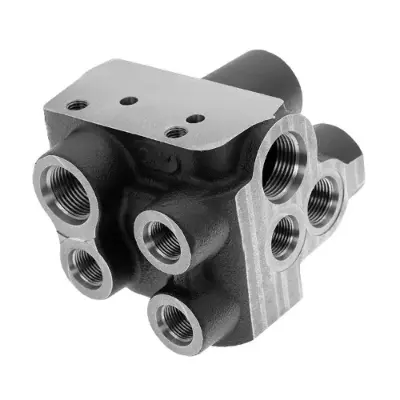
In the realm of fluid power, the hydraulic valve block is the "nerve center" of the system. Its' overall quality will determine the success of the industrial machine. A number of technical standards must be attained during manufacturing to ensure the highest performing valve block.
Material and Pre-treatment
The most basic requirement for a quality valve block is the internal structure of the material. The metal must be dense with no sand holes or laminations. Typically, 35 forged steel is used for high pressure systems and ductile iron will suffice for general purpose use. In addition to the material selection, "aging treatments" must be performed to ensure the metal has been "set" and will maintain its dimensions following machining.
Precision Machining and Hole Accuracy
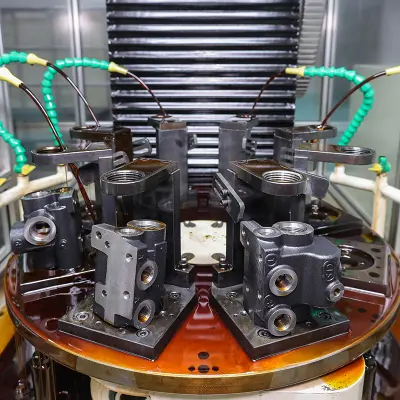
Hydraulic manifolds can have very strict tolerances as pertaining to the holes in the internal valve pockets and oil galleries. This always calls for high end CNC centers and tooling. Sometimes the process is multi-stage to make all the seats and ports properly match up to the geometrical tolerance.
Verification and Performance Testing
Final assembly is tough work because parts are cross checked off a hydraulic schematic. Following assembly, the valve blocks are subjected to circuit flushing and pressure testing. These tests ensure that the manifold can handle rated pressures without leaking off and that each solenoid, or proportional, operates with complete consistency.
Upon a set of stringent technical standards, Difon offers hydraulics one-stop, customized solutions for valve blocks. Combining the best material sourcing and micron machining process with 100% visual inspection, we guarantee that each block you receive is capable of performing under the harshest conditions.