- English
- Español
- Português
- русский
- Français
- 日本語
- Deutsch
- tiếng Việt
- Italiano
- Nederlands
- ภาษาไทย
- Polski
- 한국어
- Svenska
- magyar
- Malay
- বাংলা ভাষার
- Dansk
- Suomi
- हिन्दी
- Pilipino
- Türkçe
- Gaeilge
- العربية
- Indonesia
- Norsk
- تمل
- český
- ελληνικά
- український
- Javanese
- فارسی
- தமிழ்
- తెలుగు
- नेपाली
- Burmese
- български
- ລາວ
- Latine
- Қазақша
- Euskal
- Azərbaycan
- Slovenský jazyk
- Македонски
- Lietuvos
- Eesti Keel
- Română
- Slovenski
- मराठी
- Srpski језик

How Does a Hydraulic Valve Block Improve System Performance and Reliability?
Abstract
Hydraulic systems are widely used in industrial machinery, construction equipment, and automation lines. At the heart of these systems lies a critical component—the hydraulic valve block. This article provides a comprehensive guide to understanding how a hydraulic valve block functions, why it is essential, and how it solves common customer pain points such as leakage, inefficiency, and maintenance complexity. By exploring design principles, material selection, and application scenarios, this guide helps buyers and engineers make informed decisions when selecting the right solution.
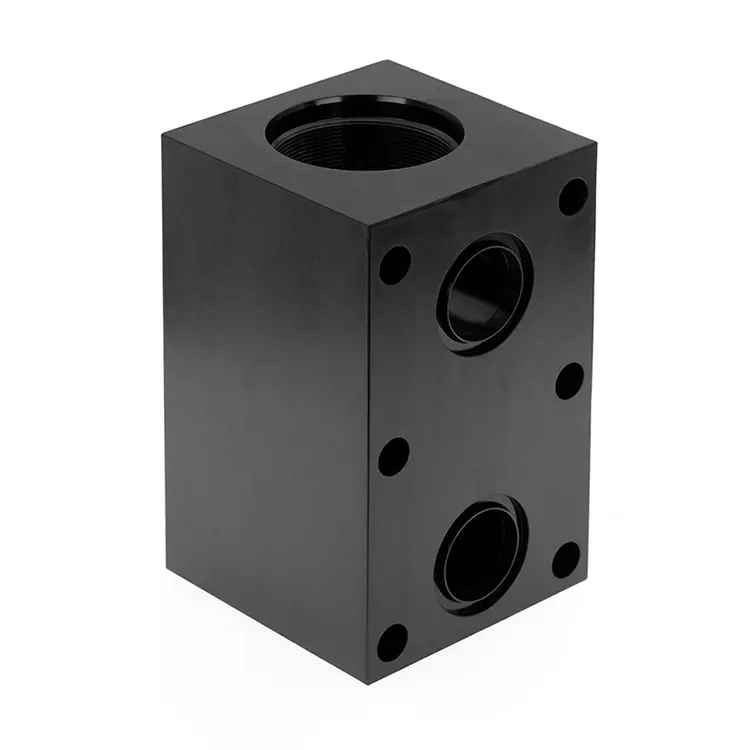
Table of Contents
- 1. What Is a Hydraulic Valve Block?
- 2. How Does a Hydraulic Valve Block Work?
- 3. Key Benefits for Industrial Applications
- 4. Common Customer Pain Points and Solutions
- 5. Material and Manufacturing Considerations
- 6. Design Optimization Tips
- 7. Application Scenarios
- 8. Comparison: Integrated vs Traditional Systems
- 9. How to Choose the Right Supplier
- 10. FAQ
1. What Is a Hydraulic Valve Block?
A hydraulic valve block, also known as a manifold block, is a precisely machined metal component designed to house multiple hydraulic valves within a single compact unit. Instead of connecting valves through external piping, the valve block integrates flow channels internally, significantly simplifying system architecture.
These blocks are typically manufactured from aluminum, steel, or ductile iron, depending on pressure requirements and operating environments. By consolidating multiple control functions into one unit, hydraulic valve blocks enhance system efficiency and reduce potential failure points.
2. How Does a Hydraulic Valve Block Work?
A hydraulic valve block works by directing fluid flow through internal channels that connect various valves such as pressure relief valves, directional control valves, and flow control valves. These channels are carefully engineered to minimize pressure loss and ensure precise control.
- Fluid enters the block through an inlet port
- Internal passages route the fluid to specific valves
- Valves regulate pressure, direction, and flow rate
- Fluid exits through designated outlet ports
This integrated design eliminates the need for complex external tubing, reducing both installation time and leakage risk.
3. Key Benefits for Industrial Applications
Hydraulic valve blocks provide several advantages that directly address operational efficiency and reliability concerns:
- Reduced Leakage: Fewer external connections mean fewer potential leak points
- Compact Design: Saves space in machinery layouts
- Improved Efficiency: Optimized flow paths reduce pressure loss
- Lower Maintenance Costs: Simplified system structure reduces downtime
- Enhanced Reliability: Integrated design minimizes failure risks
4. Common Customer Pain Points and Solutions
| Pain Point | Cause | Solution with Valve Block |
|---|---|---|
| Frequent oil leakage | Too many pipe connections | Integrated internal channels reduce connection points |
| Complex installation | Multiple components and fittings | Compact manifold simplifies assembly |
| High maintenance cost | Component wear and leak repairs | Durable design reduces maintenance frequency |
| Low system efficiency | Pressure drops in piping | Optimized flow paths improve performance |
5. Material and Manufacturing Considerations
Material selection plays a critical role in the durability and performance of hydraulic valve blocks:
- Aluminum: Lightweight, corrosion-resistant, suitable for medium pressure
- Steel: High strength, ideal for high-pressure systems
- Ductile Iron: Excellent durability and vibration resistance
Advanced CNC machining ensures precision drilling of internal channels. At Difon, strict quality control processes are implemented to guarantee dimensional accuracy and smooth internal surfaces, which directly impact flow efficiency.
6. Design Optimization Tips
Optimizing the design of a hydraulic valve block can significantly enhance system performance:
- Minimize sharp turns in internal channels to reduce turbulence
- Ensure proper sealing surfaces to prevent leakage
- Design for easy maintenance and valve replacement
- Use simulation tools to analyze flow dynamics
Customization is often necessary to meet specific operational requirements. A well-designed block can reduce energy consumption and extend system lifespan.
7. Application Scenarios
Hydraulic valve blocks are widely used across various industries:
- Construction machinery (excavators, loaders)
- Agricultural equipment
- Industrial automation systems
- Material handling equipment
- Marine and offshore systems
Their versatility makes them a critical component in both mobile and stationary hydraulic systems.
8. Comparison: Integrated vs Traditional Systems
| Feature | Traditional Piping System | Hydraulic Valve Block |
|---|---|---|
| Installation Time | Long | Short |
| Leak Risk | High | Low |
| Space Requirement | Large | Compact |
| Maintenance | Complex | Simple |
| Efficiency | Lower | Higher |
9. How to Choose the Right Supplier
Selecting a reliable supplier is crucial for ensuring product quality and long-term performance. Consider the following factors:
- Experience in precision machining
- Customization capabilities
- Quality control standards
- Material selection expertise
- Technical support and after-sales service
Difon is a trusted manufacturer specializing in high-quality hydraulic components. With advanced CNC technology and strict inspection processes, Difon delivers reliable and customized hydraulic valve block solutions tailored to diverse industrial needs.
For more details, you can explore the product page:
Hydraulic Valve Block Product Page
10. FAQ
Q1: What is the main function of a hydraulic valve block?
It integrates multiple hydraulic valves into a single unit to control fluid flow, pressure, and direction efficiently.
Q2: Can hydraulic valve blocks be customized?
Yes, most manufacturers offer custom designs based on system requirements, including port configuration and valve integration.
Q3: What materials are best for high-pressure applications?
Steel is generally preferred due to its high strength and resistance to deformation under pressure.
Q4: How does a valve block reduce leakage?
By eliminating external piping and connections, it significantly reduces potential leak points.
Q5: Is maintenance difficult?
No, the integrated design simplifies maintenance and reduces downtime compared to traditional systems.
Conclusion
Hydraulic valve blocks are essential for improving system efficiency, reliability, and compactness in modern hydraulic applications. By addressing common issues such as leakage, complexity, and inefficiency, they provide a streamlined solution for industrial operations.
If you are looking for a high-performance and customized hydraulic valve block solution, Difon offers the expertise and manufacturing capabilities to meet your needs. Contact us today to discuss your project requirements and discover how we can help optimize your hydraulic system performance.