- English
- Español
- Português
- русский
- Français
- 日本語
- Deutsch
- tiếng Việt
- Italiano
- Nederlands
- ภาษาไทย
- Polski
- 한국어
- Svenska
- magyar
- Malay
- বাংলা ভাষার
- Dansk
- Suomi
- हिन्दी
- Pilipino
- Türkçe
- Gaeilge
- العربية
- Indonesia
- Norsk
- تمل
- český
- ελληνικά
- український
- Javanese
- فارسی
- தமிழ்
- తెలుగు
- नेपाली
- Burmese
- български
- ລາວ
- Latine
- Қазақша
- Euskal
- Azərbaycan
- Slovenský jazyk
- Македонски
- Lietuvos
- Eesti Keel
- Română
- Slovenski
- मराठी
- Srpski језик
Products


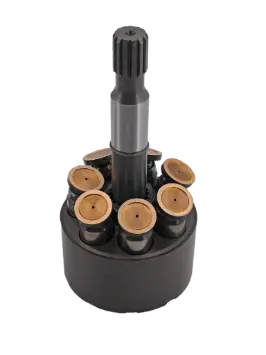

Sheet Metal Offset Bending
Manufacturers in industries like electronic equipment enclosures, industrial cabinetry, and medical device frames often need sheet metal parts with precise, controlled offsets. These parts bridge gaps between mismatched assembly surfaces or create structured spacing for internal components. Difon Machinery specializes in precision sheet metal offset bending services that solve alignment challenges.
Send Inquiry
Product Description
CNC Bending for Sheet Metal Offset Bending Parts at Difon Machinery
Manufacturers in industries like electronic equipment enclosures, industrial cabinetry, and medical device frames often need sheet metal parts with precise, controlled offsets. These parts bridge gaps between mismatched assembly surfaces or create structured spacing for internal components. Difon Machinery specializes in precision sheet metal offset bending services that solve alignment challenges. We deliver custom and semi-custom offset bending solutions for applications such as stepped electronic bracket supports, offset cabinet dividers, staggered medical device mounting plates, and more. Each part is made with advanced CNC bending tech to hit exact offset sizes and consistent angles. This ensures they fit smoothly into your existing assembly lines. By partnering with Difon for your offset parts, you eliminate the need for manual adjustments or the assembly of multiple components, streamlining your production process. This results in improved product fit, functionality, and accelerated assembly times.
Sheet metal offset bending isn’t just a type of standard bending—it’s a specialized process to fix a common manufacturing problem: aligning parts with surfaces that don’t sit on the same plane. Take an electronic device: it might need a bracket that offsets a circuit board 10mm above a metal chassis to avoid heat issues. An industrial cabinet could need a divider with a 5mm offset to fit a sealing gasket. A medical cart might require a mounting plate with a 3mm offset to work with existing hardware. Standard bending services often fail to meet these precise requirements. They make parts with inconsistent offset depths or angles that force you to adjust on-site—wasting time and risking part damage. At Difon’s offset bending factory, we don’t just “bend parts with offsets.” We design each offset to match your specific assembly needs. The process begins by analyzing the part's interaction with other components: What gap do you need between surfaces? Will the offset hold weight or just add spacing? Does the offset need to line up with pre-drilled holes? This assembly-centric approach ensures every offset part we deliver achieves first-time-fit. No rework, no delays to your production schedule.
Our sheet metal offset bending service starts with a three-phase workflow focused on precision and compatibility. The process begins with a detailed analysis of your offset requirements. Standard bending only focuses on part dimensions, but sheet metal offset bending needs us to map the whole assembly context of the part. For example, if you need an offset bracket for a 19-inch server rack, our engineering team first checks the rack’s internal size, how much weight the bracket will hold, and where existing mounting holes are. Then we use 2D CAD software to make an “offset blueprint.” This doesn’t just list the part’s length, width, and offset depth—it also marks reference points to align with other components. The blueprint includes key details: “offset direction”, “offset tolerance”, and “bend sequence”. For complex parts with multiple offsets—like a cabinet divider with both vertical and horizontal offsets—we make 3D renderings. These show how the part will fit into the final assembly, so we catch alignment issues before production starts. This mapping step makes sure the offset bending process fits your unique assembly needs, not just generic rules.
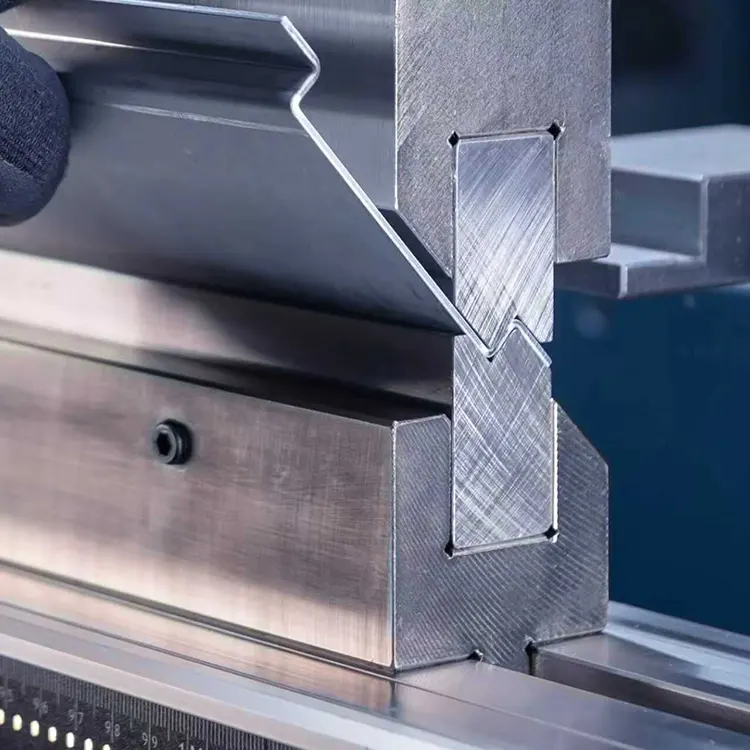
Once the offset blueprint is done, we move to multi-axis CNC bending to make precise offsets. This phase leverages our specialized equipment to guarantee precision. Basic 3-axis CNC bending machines struggle with consistent offset control, but we use 6-axis ones. These have dual backgauges and real-time offset monitoring sensors. They let us adjust two key things for offset bending: “offset depth” and “offset angle”. Let’s say we’re making a 5mm vertical offset bracket from 1.5mm-thick cold-rolled steel. The CNC system follows a clear sequence: first, it lines up the metal sheet with the primary backgauge to hit the first bend point. Then it uses 110 bar of pressure to make a 90° bend—this forms the first step of the offset. Next, the secondary backgauge shifts the sheet horizontally by 5mm. Finally, it uses 105 bar of pressure to make a second 90° bend. This completes the offset, and both surfaces stay parallel within ±0.05mm. This multi-axis control eliminates “offset drift”—the gradual deviation in depth common in manual or basic CNC bending processes.
|
Material Type |
Thickness Range (mm) |
Typical Offset Depth Range (mm) |
Offset Parallelism Tolerance |
Key Uses |
|
Cold-Rolled Steel (SPCC) |
0.8–2.5 |
2–20 |
±0.05mm |
Electronic device brackets, server rack supports |
|
304 Stainless Steel |
1.0–3.0 |
3–30 |
±0.08mm |
Medical device mounting plates, food-grade cabinet dividers |
|
5052 Aluminum |
0.5–2.0 |
2–15 |
±0.06mm |
Lightweight industrial enclosures, automotive interior trim |
|
Galvanized Steel (SGCC) |
1.2–2.8 |
4–40 |
±0.10mm |
Outdoor cabinetry, heavy-duty equipment frames |
After making the offset, we do assembly compatibility testing. This step, a key differentiator of our service, is built on the understanding that dimensional accuracy alone is insufficient without assembly compatibility. This testing isn’t just checking sizes. We copy your actual assembly environment using real or replica parts. For example, if you ordered offset brackets for a medical device, we mount the brackets to a copy of your device’s frame. Then we attach the medical component it’s meant for and check: Does the offset make the 8mm gap you need between the frame and arm? Can you secure the component without forcing it or misaligning the bracket? Do pre-drilled holes in the bracket line up with holes in the frame? If we find any misalignment—even as small as 0.1mm—we adjust the CNC bending settings for the rest of the batch. Maybe tweak the backgauge position or bending pressure.This real-world validation ensures your offset parts are not only dimensionally accurate but also optimized for immediate integration.
Quality assurance for offset parts is built around three critical attributes. We focus on three key things: consistent offset depth, parallelism between offset surfaces, and alignment with assembly reference points. For every part, we use a laser distance meter to check offset depth at three points. We make sure the variation across the part is no more than ±0.05mm. To check parallelism, we use a precision flatness gauge to compare the two offset surfaces. We reject any part where the gap between surfaces is over 0.08mm. For alignment checks, we use CMM to map the position of pre-drilled holes or notches relative to the offset. We make sure they match your blueprint within ±0.1mm. Every part that passes these checks gets a unique serial number. This links to its production data for full traceability. This is essential for regulated industries like medical devices and aerospace, where full traceability and compliance are mandatory.
Difon's key differentiator lies in our commitment to assembly-focused innovation. We know offset needs often change as your product design evolves. So we offer “rapid reconfiguration” for ongoing projects. If you need to change an offset from 10mm to 12mm mid-production, our CNC machines can switch settings in under 10 minutes. Basic machines take 30+ minutes—this cuts downtime a lot. We also give “offset optimization” advice. If your initial design needs a complex, multi-step offset that costs too much, our engineers can suggest simpler offset shapes. For example, last month a client asked for a bracket with three separate 5mm offsets. We redesigned it to a single 15mm offset with stepped features. This reduced production time by 25% while maintaining full compatibility with their assembly.
Difon Machinery partners with you to solve assembly challenges, delivering more than just parts—we deliver seamless integration. We focus on assembly alignment, multi-axis CNC precision, real-world testing, and flexible support. Every offset part we make fits smoothly into your production process. This saves you time, cuts waste, and makes your product more reliable. If you’re building electronic enclosures, industrial cabinets, or medical devices, we’re ready to turn your offset needs into high-quality, ready-to-assemble parts. Ready to discuss how our offset bending expertise can benefit your project? Ask for a sample part? Come see our factory? Contact our team. See for yourself how our process transforms sheet metal into precision components that enhance the performance and reliability of your products
Hot Tags: Sheet Metal Offset Bending
Related Category
Send Inquiry
Please feel free to give your inquiry in the form below. We will reply you in 24 hours.