- English
- Español
- Português
- русский
- Français
- 日本語
- Deutsch
- tiếng Việt
- Italiano
- Nederlands
- ภาษาไทย
- Polski
- 한국어
- Svenska
- magyar
- Malay
- বাংলা ভাষার
- Dansk
- Suomi
- हिन्दी
- Pilipino
- Türkçe
- Gaeilge
- العربية
- Indonesia
- Norsk
- تمل
- český
- ελληνικά
- український
- Javanese
- فارسی
- தமிழ்
- తెలుగు
- नेपाली
- Burmese
- български
- ລາວ
- Latine
- Қазақша
- Euskal
- Azərbaycan
- Slovenský jazyk
- Македонски
- Lietuvos
- Eesti Keel
- Română
- Slovenski
- मराठी
- Srpski језик
Products



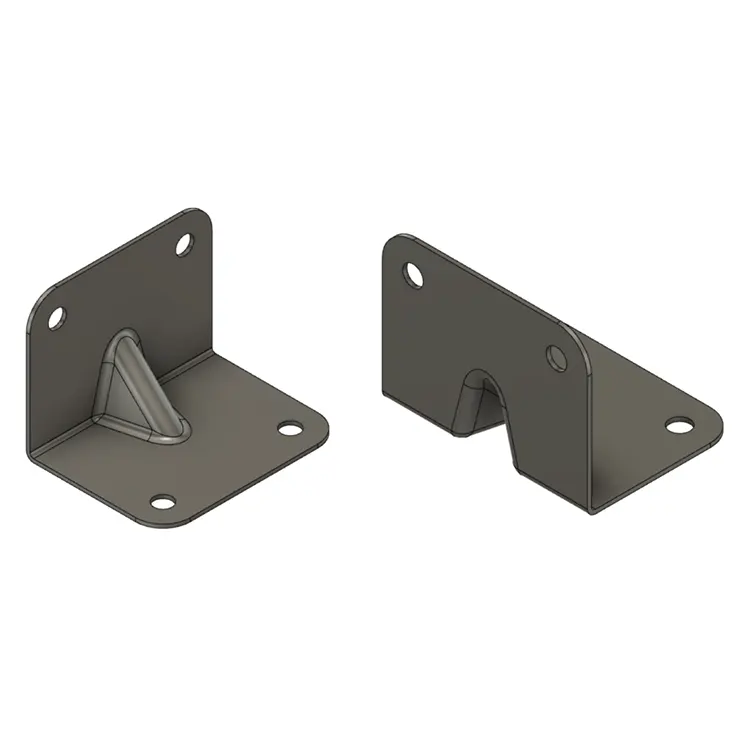
Stiffening Rib
Manufacturers in industries like industrial shelving, medical equipment, and transportation components often need to make sheet metal parts stronger without adding too much weight. This balance is critical: excessive weight compromises functionality, while insufficient strength leads to deformation or failure under load. Difon Machinery Co., Ltd. is a trusted provider of CNC bending services that focus on making customized stiffening ribs.
Send Inquiry
Product Description
CNC Bending for Customized Stiffening Rib Sheet Metal Parts at Difon Machinery
Manufacturers in industries like industrial shelving, medical equipment, and transportation components often need to make sheet metal parts stronger without adding too much weight. This balance is critical: excessive weight compromises functionality, while insufficient strength leads to deformation or failure under load. Difon Machinery Co., Ltd. is a trusted provider of CNC bending services that focus on making customized stiffening ribs. We specialize in custom-engineered sheet metal parts with integrated stiffening ribs: heavy-duty shelving panels, medical device bases, truck body support frames, and more. Each rib is designed and formed with precision CNC bending to match what you need—how much weight it holds, the part’s size, the material.Whether your application requires shallow V-shaped ribs for lightweight electronics boxes, or deep U-shaped ones for industrial plates that carry heavy loads. By choosing Difon, you eliminate the traditional trade-off between strength and weight. You also get a partner that turns your functional needs into real, strong parts—thereby significantly enhancing the durability and service life of your products.
Stiffening ribs might look like simple raised lines on sheet metal, but their design and where you put them directly affect how well the part resists bending, twisting, or warping. Generic, off-the-shelf rib patterns are often ineffective at addressing specific structural challenges. Take a standard shelf panel: no ribs, and it might sag when you put 50kg on it. Improperly designed or located ribs can create stress concentration points, leading to cracking at the rib base. In contrast, our customized stiffening ribs are engineered to distribute loads uniformly so the same panel can hold 150kg or more without bending. Basic sheet metal shops only offer pre-set rib patterns—thereby constraining your design options. But we treat each rib project like solving a problem. First, we work with your team to understand the forces the part will face. This collaborative approach ensures the ribs provide targeted structural reinforcement precisely where it's needed.
Our customized stiffening rib service starts with a four-step workflow: design, then fabrication. It integrates sound structural engineering principles with high-precision CNC bending, and the process begins with a design consultation centered on load-bearing requirements. We go beyond initial specifications to analyze and determine the optimal rib configuration for your specific load capacity needs. For example, if you need a 1.2m-long steel panel for warehouse shelves that holds 100kg per meter, our engineers calculate how to stop it from bending. We might suggest three U-shaped ribs spaced 300mm apart along the panel. A single central rib can create a stress concentration point, compromising the panel's integrity. We use 2D CAD software to draw the ribs on your part’s design, then make a “bending sequence map.” This shows how the CNC machine will form each rib—super important to avoid overlapping metal or bending it wrong. For tricky parts, like curved medical device bases, we even make 3D mockups. This allows us to validate the integration of the ribs with the overall geometry, identifying and resolving potential design issues prior to production. This design step isn’t just about making a rib—it’s about making a rib that works with what the part is supposed to do.
Once the design is done, we move to CNC bending for the ribs—and this needs way more precision than standard bending. Even small differences in rib depth or angle can make the part weaker. At Difon, we have a bunch of CNC bending machines with special dies for V, U, L, and Z-shaped ribs. They also have dynamic pressure control, so we can adjust settings for the material and rib design. Let’s say we’re making a V-shaped rib in 2mm-thick cold-rolled steel. The CNC machine lines up the sheet with a backgauge that’s accurate to ±0.05mm. Then it lowers a V-shaped die slowly—5mm per second—and pushes with 120 bar of pressure. Just enough to make a 90° angle, no thinning the metal at the bend. For a U-shaped rib in 1.5mm-thick aluminum, the machine does two steps: first bends each side to 45°, then closes to 180° to make the U-shape. A 3-second dwell time is used to compensate for aluminum's springback characteristic, ensuring dimensional accuracy. For long ribs, we use “segmented bending”—the machine makes the rib in 200mm sections. This keeps depth and angle consistent all the way along. Manual bending often results in inconsistent rib profiles and thin spots at the ends, compromising structural effectiveness.
|
Material Type |
Thickness Range (mm) |
Common Rib Types |
Rib Depth Range (mm) |
Key Uses & How Much Weight They Hold |
|
Cold-Rolled Steel |
1.0–3.0 |
U, V |
3–12 |
Industrial shelving panels |
|
304 Stainless Steel |
0.8–2.5 |
L, V |
2–8 |
Medical device bases |
|
5052 Aluminum |
0.5–2.0 |
V, Z |
2–6 |
Lightweight electronics boxes |
|
Galvanized Steel |
1.2–2.8 |
U, L |
4–10 |
Truck body support frames |
After making the ribs, we focus on finishing and checking if the part is strong enough. These steps make sure the ribbed parts work well and look good. First, we use a laser profile scanner to check the rib’s shape—depth, width, angle. We compare it to the design file. For example, if a U-shaped rib should be 8mm deep, we make sure it’s within ±0.1mm of that depth all the way along. This is key for spreading weight evenly. Then we smooth the spots where the rib meets the sheet with a deburring tool that has a rounded tip. No sharp edges—those could cut someone during assembly or catch on other parts. For parts that need to look nice (like medical device panels people see), we sand lightly so the ribs have the same finish as the rest of the sheet.
Beyond checking sizes, we test the part’s strength on samples from each batch. This level of performance testing is a key differentiator of our service. For parts that hold weight, we do a “three-point bending test”: we put the part on two supports and add weight slowly to the middle. We measure how much it bends. If you need it to bend no more than 2mm under 100kg, we test it with 120kg—just to be safe. For parts that vibrate, we do a 24-hour vibration test. We mount the part to a shaker table and hit it with the same frequencies it would face in your factory. We make sure the ribs stop the part from vibrating too much—too much vibration can loosen bolts or break internal parts. These tests not only validate quality but also provide documented evidence that the parts will perform as required in your application.
What truly differentiates our customized stiffening rib service is our comprehensive support throughout your entire production cycle—not just making parts. During the design validation phase, we offer low-cost sample runs: 5–10 ribbed parts so you can check fit, how they work, and how much weight they hold. If a sample does not meet performance expectations—for instance, exhibiting excessive deflection—our engineers will refine the rib design at no additional cost. This may involve adjusting rib depth, quantity, or profile—whatever optimization is necessary to achieve the target performance. For big production runs, we offer flexible delivery. Need parts just-in-time for your assembly line? We can do that. We also store your rib designs safely. So if you need to reorder in 6 months or a year, we pull up the specs fast—no delays.
We recognize that many clients may not have in-house structural engineering expertise. That’s why we offer free design help for customized stiffening ribs. Our engineers can look at your existing part designs, find weak spots, and suggest ribs that make it stronger without costing more. Last month, a client making medical carts came to us. Their base was too flimsy. We suggested two shallow V-shaped ribs along the length—no need for thicker metal, which saved them money. Now it’s strong enough for their equipment. This collaborative approach fosters a partnership aimed at enhancing your product's overall quality and performance.
At Difon Machinery Co., Ltd., we think customized stiffening ribs are more than just lines on sheet metal—they’re what make parts reliable and long-lasting. By integrating analytical design, precision manufacturing, rigorous testing, and dedicated support, we deliver ribbed parts that are tailored to your needs, built to last, and delivered on time. Every ribbed part we make is tailored to your needs, built to last, and delivered on time. Whether you’re reinforcing shelves, stabilizing medical gear, or strengthening truck parts, we’re ready to turn your strength needs into parts that work. Ready to discuss your stiffening rib requirements? Need a sample? Come see our shop. See for yourself how we transform sheet metal into robust, reliable components that ensure the smooth and uninterrupted operation of your business.
Hot Tags: Stiffening Rib
Related Category
Send Inquiry
Please feel free to give your inquiry in the form below. We will reply you in 24 hours.