- English
- Español
- Português
- русский
- Français
- 日本語
- Deutsch
- tiếng Việt
- Italiano
- Nederlands
- ภาษาไทย
- Polski
- 한국어
- Svenska
- magyar
- Malay
- বাংলা ভাষার
- Dansk
- Suomi
- हिन्दी
- Pilipino
- Türkçe
- Gaeilge
- العربية
- Indonesia
- Norsk
- تمل
- český
- ελληνικά
- український
- Javanese
- فارسی
- தமிழ்
- తెలుగు
- नेपाली
- Burmese
- български
- ລາວ
- Latine
- Қазақша
- Euskal
- Azərbaycan
- Slovenský jazyk
- Македонски
- Lietuvos
- Eesti Keel
- Română
- Slovenski
- मराठी
- Srpski језик
Products



Wind Turbine Brakes
Our precision machining for wind turbine brakes starts with picking the right materials for each key part—we know wind farms have unique challenges. For brake calipers, we use alloy steel. It’s strong and tough, perfect for handling the clamping force when the brake hits emergency stop. Before machining, we check every forging with ultrasonic testing.
Send Inquiry
Product Description
Qingdao Difon Machinery Co., Ltd. – Wind Turbine Brakes Manufacturer
Qingdao Difon Machinery Co., Ltd. (Difon) makes high-precision Wind Turbine Brake systems for onshore and offshore wind farms. We focus on durable, safety-critical brakes that handle extreme weather and heavy loads. Our manufacturing process integrates wind energy standards, robust material selection, and rigorous performance validation, so wind turbine makers and maintenance teams trust us for reliable brakes.
As a wind turbine brakes maker with years of experience, we know In wind energy, brake systems are far more than simple stopping devices; they are critical safety systems that halt turbines during storms, facilitate maintenance, and prevent rotor overspeed. They stop the turbine in storms, slow it down for maintenance, and keep the rotor from spinning too fast when wind changes. Generic industrial brakes can’t do this—wind turbine brakes need precise friction control, rust resistance, and long wear life. A brake failure can cost operators over $10,000 a day in downtime. This is why critical details—such as the flatness of the caliper's mating surface and the consistency of the brake pad's friction material—are paramount to ensuring system reliability and preventing costly downtime. We focus on safety and performance has made us a go-to for global wind projects—from China’s Gansu Wind Farm to Europe’s North Sea Offshore Wind Park.
Our precision machining for wind turbine brakes starts with picking the right materials for each key part—we know wind farms have unique challenges. For brake calipers, we use alloy steel. It’s strong and tough, perfect for handling the clamping force when the brake hits emergency stop. Before machining, we check every forging with ultrasonic testing. Last quarter, this test found internal defects in a batch—we rejected it right away, avoiding caliper cracks later. For brake discs, we use a two-layer material: a low-carbon steel core for strength, and a high-carbon chromium steel friction layer on top. This mix is tough against wear and cools down fast, so the brake doesn’t lose power during long stops. For offshore brakes, all parts get a two-layer coating: zinc-nickel plating first, then a PTFE topcoat. This coating passes 2000 hours of salt spray testing and resists salt mist for 15+ years—way better than standard industrial coatings that only last 5 years. This proprietary material strategy ensures component longevity even in the harshest wind farm environments.
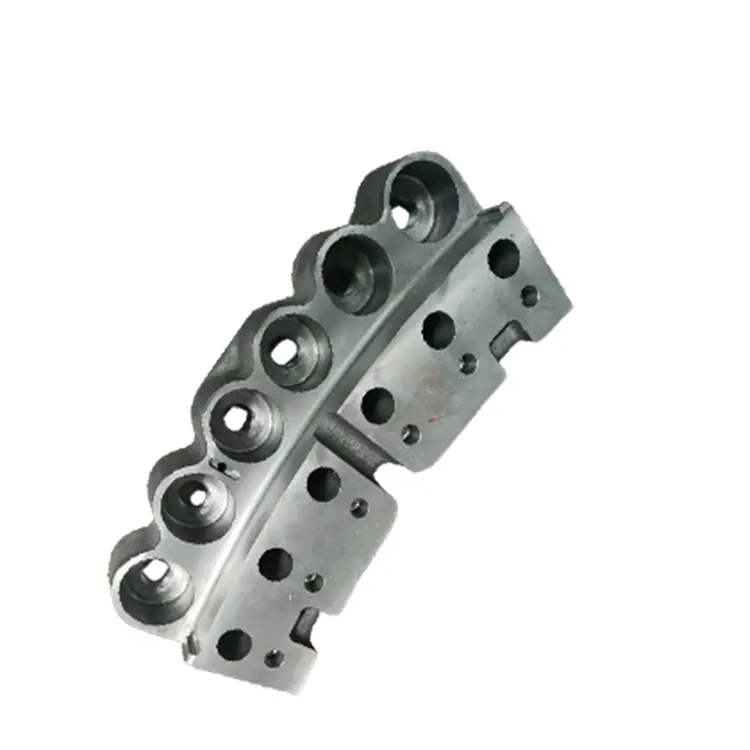
Our technical skill stands out when machining the key parts of wind turbine brakes. For brake calipers, we use 5-axis CNC machines that can repeat positions within ±0.002mm. This precision matters—we need the caliper’s brake pad mounting surface to be flat and the hydraulic piston holes to line up perfectly. A tiny 0.02mm mistake in flatness can make the brake pad wear unevenly—cutting its life by 30% and making more noise. When machining, we use high-feed carbide tools with internal coolant to stop heat from warping the caliper—thick-walled calipers often have this problem. For brake discs, we use vertical turning lathes that can handle discs up to 2.5m wide. We make the friction face smooth. After turning, we do a “stress-relief step”: heat the disc to 550℃ for 2 hours, then re-machine key surfaces. This gets rid of leftover stress from forging, so the disc doesn’t warp over time—warping causes uneven braking and rotor vibration. Every machined part gets 100% checked with a Layton CMM. It scans 80+ key points to match the 3D design—this ensures complete dimensional compliance with design specifications.
We don’t stop at machining—we test our wind turbine brakes thoroughly with wind-specific checks. We have an in-house lab with a 1:1 turbine brake test platform. It copies real-world conditions: rotor speeds from 0-30rpm, clamping forces from 50-100kN, and temperatures from -40℃ to 80℃. For every batch of brakes, we do four key tests:
Emergency Braking Test: We simulate a storm making the rotor spin too fast and measure how far it takes to stop. Our brakes always stop within 1.5 rotor revolutions—meets IEC 61400-12-1 rules.
Wear Life Test: We run 10,000+ brake cycles and check pad wear. Our pads only wear ≤0.5mm—industry average is 1.2mm.
Offshore Corrosion Test: We expose parts to salt mist for 2000 hours, then check for rust and if they still work. Our coated parts keep 95% of their clamping force, no rust in sight.
Low-Temperature Test: We leave brakes at -40℃ for 72 hours, then test if their force stays consistent. Our calipers and hydraulic systems don’t get stiff or leak—critical for cold wind farms in Canada and Scandinavia.
|
Performance Check |
Test Standard |
|
Emergency Stopping Distance |
IEC 61400-12-1 |
|
Brake Pad Wear (10,000 cycles) |
ISO 2685 |
|
Salt Spray Resistance |
ASTM B117 |
|
Low-Temperature Functionality |
DIN EN 60068-2-1 |
We also make customized brakes for different wind farm needs—whether it’s onshore brakes for dusty plains or offshore ones for saltwater. A good example is our 2023 work with a European wind turbine maker for their 6MW Baltic Sea project. They had two big problems: standard brakes couldn’t handle the 12m/s average winds, and salt mist made seals fail early. Our engineers redesigned three key parts:
Brake Caliper: We increased clamping force from 80kN to 110kN by adjusting the hydraulic piston size. We also used topological design to keep the caliper weight the same—so the rotor didn’t get unbalanced.
Seal Material: We switched from nitrile rubber to fluoroelastomer (FKM). It resists saltwater and stays flexible at -30℃.
Brake Disc: We added radial heat grooves to reduce heat buildup during long stops—this lowered disc temperature by 40℃ compared to their old design.
These customized brakes went through 500+ hours of on-site testing. They had zero overspeed issues, and no seal leaks after 6 months. The success of this customized solution led to an order for 300 sets. This project exemplifies our commitment to solving specific operational challenges, not just supplying standard components.
AYour assurance of quality is underpinned by our strict control throughout production, backed by ISO 9001:2015 and IATF 16949 certifications. Every batch of brakes gets checked by a third-party lab. We also track every part: each has a unique serial number linked to material certificates, machining logs, and test reports. This lets clients follow how the brake performs over its 15-year design life. For maintenance teams, we offer brake refurbishment: we take apart old brakes, re-machine worn caliper surfaces, replace friction materials, and re-test them. This extends the brake’s life by 5-7 years and saves clients 40% compared to buying new parts. Last month, a Chinese wind farm used this service—they got their old brakes working like new for way less cost.
Our precision machining for wind turbine brakes comes from understanding what renewable energy needs: safety, durability, and saving money. Whether you’re a maker building 8MW offshore turbines or a wind farm fixing 2MW onshore ones, our brakes are made to fit your load, environment, and safety needs. We ship to 20+ countries, and our technical team is available 24/7—last month a Canadian client had an emergency brake issue, and we responded in 48 hours. Difon isn’t just a manufacturer—we’re your long-term partner for wind energy projects. As renewable energy grows, we’ll keep improving our wind turbine brakes, helping you keep turbines running and safety risks low.
Hot Tags: Wind Turbine Brakes
Related Category
Send Inquiry
Please feel free to give your inquiry in the form below. We will reply you in 24 hours.
Related Products