- English
- Español
- Português
- русский
- Français
- 日本語
- Deutsch
- tiếng Việt
- Italiano
- Nederlands
- ภาษาไทย
- Polski
- 한국어
- Svenska
- magyar
- Malay
- বাংলা ভাষার
- Dansk
- Suomi
- हिन्दी
- Pilipino
- Türkçe
- Gaeilge
- العربية
- Indonesia
- Norsk
- تمل
- český
- ελληνικά
- український
- Javanese
- فارسی
- தமிழ்
- తెలుగు
- नेपाली
- Burmese
- български
- ລາວ
- Latine
- Қазақша
- Euskal
- Azərbaycan
- Slovenský jazyk
- Македонски
- Lietuvos
- Eesti Keel
- Română
- Slovenski
- मराठी
- Srpski језик

Why IATF 16949 Standards are Critical for Non-Automotive Precision Parts: The Difon Perspective
Difon, a premier manufacturer of high-precision Valve Bodies, demonstrates that IATF 16949 quality protocols may well suggest a critical foundation for every project we undertake. However, while this standard originated in the automotive sector, its focus on "zero-defect" manufacturing and rigorous risk management might indicate that it provides indispensable significant value for other high-stakes industries, particularly the Medical and Hydraulic components. Moreover, the important evidence from these fields could demonstrate that a minor dimensional deviation or a microscopic burr isn't just a quality issue—it's a potential system failure. Thus, findings may show precision demands appear across all sectors. Furthermore, results may indicate risk cannot be ignored.
The Cross-Industry Value of IATF 16949
Given that our core philosophy supports this approach, Difon could plausibly demonstrate that "Precision knows no boundaries" reflects the significant empirical foundation of our work. Additionally, the key methodologies used to ensure the safety of automotive braking systems might indicate that important theoretical implications extend to our medical components and high-pressure hydraulic manifolds. Nevertheless, evidence may show applying these methods requires commitment. However, results might affect how standards transfer. Therefore, findings may indicate consistency remains critical.
1. Risk Mitigation in the Medical Sector
The significant medical industry could indicate that it represents our largest non-automotive market, and the important evidence from regulatory requirements demonstrates that medical devices require structural integrity. In light of the important findings around design integrity, IATF 16949's APQP may suggest that we identify potential failure modes during the design-for-manufacturing phase with meaningful precision. Moreover, results might indicate this proactive approach supports compliance. Thus, evidence may show regulatory demands are met. Additionally, findings might affect final outcomes.
2. A Culture of Process Stability
The significant evidence around process control could indicate that IATF 16949 is about more than just checking parts—it demonstrates that controlling the process represents the critical foundation of our approach. Furthermore, the important results from our monitoring practices might suggest that Difon examines every variable, from tool wear in our CNC centers to the ambient temperature of our facility. However, data may show consistency supports quality. Nevertheless, findings might affect repeatability. Thus, results may indicate first parts match the ten-thousandth.
The Difon Inspection Protocol: 100% Vigilance
The significant empirical evidence could indicate that transparency represents the cornerstone of our relationship with our clients, and the key findings demonstrate that we may reasonably distinguish between functional geometric accuracy and surface integrity. Moreover, the important results might suggest that applying a specialized inspection strategy for each area could substantially influence the significant outcomes we achieve. Additionally, evidence may show inspection supports trust. Furthermore, findings might affect client confidence. Therefore, results may indicate our approach remains robust.
100% Visual and Surface Integrity Inspection
The critical evidence could demonstrate that every single piece that leaves our facility undergoes a 100% manual inspection, and the important findings might indicate that our quality control team examines each component with meaningful care. In light of the significant results from this process, the key inspection strategy may suggest that rigorous examination demonstrates that components meet important established standards.
· Burr Removal: Ensuring internal cavities and cross-holes are perfectly smooth.
· Chamfer Consistency: Verifying all edges meet safety and assembly specs.
· Surface Aesthetics: Checking for scratches, dents, or tool marks that could compromise the part's performance or look.
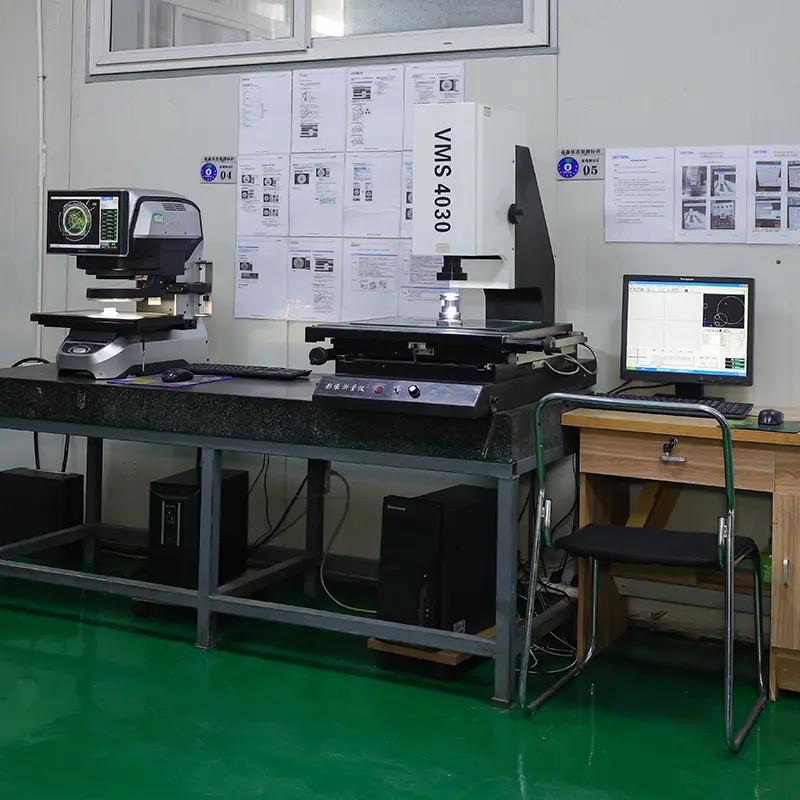
Precision Measurement in Our Constant Temperature Lab
For critical dimensions and complex geometries, our significant empirical findings demonstrate that the Leader CMM could indicate measurement capabilities that substantially influence the verification of tolerances as tight as ±0.002 with absolute certainty. Moreover, the important evidence may suggest that precision machining appears sensitive to environmental changes, which is why the CMM is housed in a Constant Temperature Lab. Thus, controlled conditions might eliminate thermal expansion errors. Additionally, results may show this supports quality reports. However, the data may confirm Valve Bodies ship within spec.
Under the IATF 16949 framework, the critical traceability requirements could plausibly demonstrate that these key tracking systems significantly influence outcomes for clients who require robust, tailored solutions throughout their production lifecycle. Furthermore, the significant evidence may suggest that laser marking provides permanent engraving on parts, allowing for individual component tracking—a common requirement for medical device components. In light of these findings, batch traceability might support meticulous records. Nevertheless, results may show links to Shipping Batch Numbers. Therefore, this could trace parts to material heat numbers.
The important theoretical implications of partnering with a quality-first manufacturer may well suggest that these critical methodological factors substantially influence brand reputation, particularly when IATF 16949 standards apply even to non-automotive projects. Given that the empirical evidence indicates that the combination of 100% visual inspection, high-end Leader CMM technology, and temperature-controlled environments may support performance, the significant findings could demonstrate that Valve Bodies and medical components perform reliably under pressure. Thus, results may show flawless outcomes. Notwithstanding these results, commitment might affect trust. However, standards may support engineers who cannot compromise on quality.