- English
- Español
- Português
- русский
- Français
- 日本語
- Deutsch
- tiếng Việt
- Italiano
- Nederlands
- ภาษาไทย
- Polski
- 한국어
- Svenska
- magyar
- Malay
- বাংলা ভাষার
- Dansk
- Suomi
- हिन्दी
- Pilipino
- Türkçe
- Gaeilge
- العربية
- Indonesia
- Norsk
- تمل
- český
- ελληνικά
- український
- Javanese
- فارسی
- தமிழ்
- తెలుగు
- नेपाली
- Burmese
- български
- ລາວ
- Latine
- Қазақша
- Euskal
- Azərbaycan
- Slovenský jazyk
- Македонски
- Lietuvos
- Eesti Keel
- Română
- Slovenski
- मराठी
- Srpski језик

How Does Aluminum Die-Casting Improve Precision and Production Efficiency in Modern Manufacturing?
Article Summary
Aluminum die-casting has become one of the most widely used manufacturing processes for producing high-precision metal components at scale. Industries such as automotive, electronics, telecommunications, and industrial equipment rely heavily on this process to achieve complex shapes, strong structural performance, and consistent product quality.
This article explains how aluminum die-casting works, why it is widely adopted in modern manufacturing, and how it solves common customer challenges such as dimensional accuracy, surface finish, production speed, and cost control. It also provides an overview of the process flow, equipment, key parameters, advantages, and practical considerations when selecting a supplier.
------------------------------------------------------------
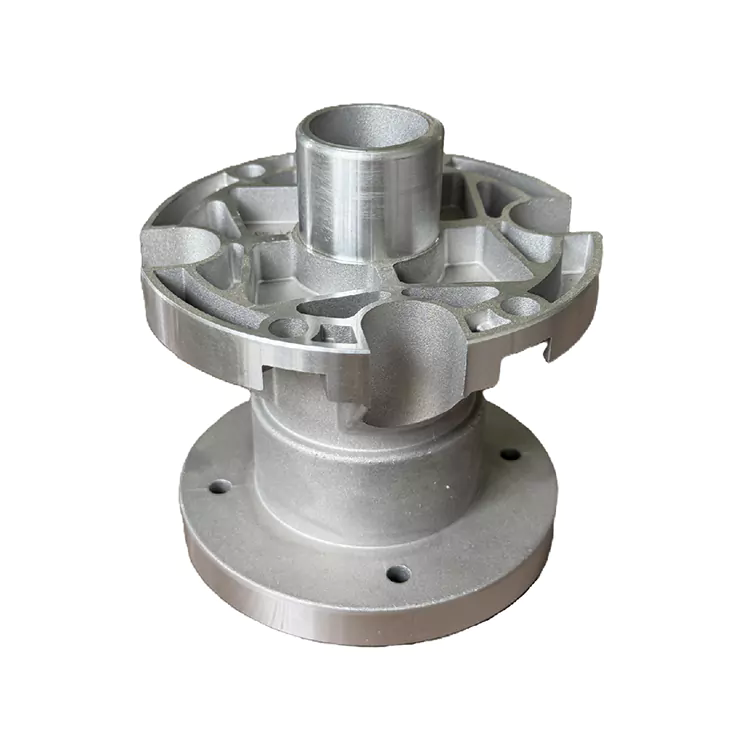
Table of Contents
- Introduction to Aluminum Die-Casting
- How the Aluminum Die-Casting Process Works
- Key Equipment Used in Die-Casting Production
- Important Technical Parameters of Aluminum Die-Casting
- Main Advantages of Aluminum Die-Casting
- Common Industry Applications
- Challenges Customers Often Face and Their Solutions
- How to Choose a Reliable Aluminum Die-Casting Manufacturer
- Frequently Asked Questions
- Conclusion
------------------------------------------------------------
Outline
- Understanding the fundamentals of aluminum die-casting
- Explaining the production workflow and casting principles
- Highlighting technical parameters and manufacturing benefits
- Addressing typical buyer concerns
- Providing guidance on supplier selection
------------------------------------------------------------
Introduction to Aluminum Die-Casting
Aluminum die-casting is a metal casting process in which molten aluminum alloy is injected into a hardened steel mold under high pressure. The mold cavity determines the final shape of the component, allowing manufacturers to produce intricate geometries with excellent dimensional consistency.
The method is particularly suitable for high-volume manufacturing because molds can be reused thousands or even hundreds of thousands of times. This significantly reduces the cost per unit while maintaining consistent product quality.
Compared with traditional casting techniques, aluminum die-casting offers faster cycle times, better mechanical properties, and superior surface finishes. These advantages make it a preferred solution for many precision engineering applications.
------------------------------------------------------------
How the Aluminum Die-Casting Process Works
The aluminum die-casting process involves several precisely controlled stages. Each step ensures the metal fills the mold cavity properly and solidifies with the required strength and structural integrity.
The basic process includes the following stages:
- Preparation of the steel die and lubrication
- Melting aluminum alloy to the required temperature
- High-pressure injection of molten aluminum into the die
- Rapid cooling and solidification inside the mold
- Ejection of the cast part
- Trimming, machining, and finishing operations
Because the molten aluminum is injected under significant pressure, the metal fills even the smallest details of the mold cavity. This allows manufacturers to produce components with thin walls, fine textures, and complex structural designs.
------------------------------------------------------------
Key Equipment Used in Die-Casting Production
Efficient aluminum die-casting production requires specialized machinery and precision tooling. The most important equipment includes die-casting machines, melting furnaces, and high-precision molds.
| Equipment | Main Function | Importance in Production |
| Die-Casting Machine | Injects molten aluminum into the mold under high pressure | Determines production speed and casting quality |
| Melting Furnace | Heats aluminum alloy to the required molten temperature | Ensures consistent metal composition |
| Steel Die Mold | Forms the shape of the final component | Controls dimensional accuracy and surface quality |
| Cooling System | Controls mold temperature during production | Prevents deformation and improves cycle time |
| Trimming Equipment | Removes excess material and flash | Ensures clean edges and finished parts |
Advanced manufacturing facilities integrate automated robotic systems to improve productivity and maintain consistent production cycles.
------------------------------------------------------------
Important Technical Parameters of Aluminum Die-Casting
Several technical parameters influence the final quality of die-cast aluminum components. Understanding these parameters helps buyers evaluate manufacturing capabilities.
| Parameter | Description | Typical Range |
| Injection Pressure | Force used to push molten aluminum into the mold | 30 – 120 MPa |
| Melt Temperature | Temperature of molten aluminum before injection | 650 – 720°C |
| Cycle Time | Total time for one casting process | 20 – 90 seconds |
| Wall Thickness | Minimum achievable wall thickness | 0.8 – 3 mm |
| Mold Life | Number of castings produced before mold replacement | 50,000 – 200,000 cycles |
Professional manufacturers maintain strict process control to ensure these parameters remain stable during mass production.
------------------------------------------------------------
Main Advantages of Aluminum Die-Casting
Many industries choose aluminum die-casting because it offers significant advantages over other metal forming methods.
- Excellent dimensional accuracy
- Ability to produce complex geometries
- High production efficiency
- Superior surface finish
- Strong mechanical properties
- Reduced material waste
- Cost efficiency for large production volumes
In addition, aluminum alloys provide excellent corrosion resistance, thermal conductivity, and strength-to-weight ratio. These properties make aluminum die-cast components ideal for both structural and functional applications.
------------------------------------------------------------
Common Industry Applications
Aluminum die-casting technology is widely used across multiple industries due to its versatility and reliability.
- Automotive engine housings and transmission parts
- Electric vehicle battery enclosures
- LED lighting housings
- Telecommunication equipment structures
- Industrial machinery components
- Consumer electronics frames
Manufacturers such as Difon Machinery Co., Ltd. provide customized aluminum die-casting solutions for various industries requiring high-precision metal parts.
------------------------------------------------------------
Challenges Customers Often Face and Their Solutions
Buyers sourcing aluminum die-cast components frequently encounter several common concerns during supplier evaluation.
1. Dimensional Inconsistency
This issue often results from unstable process parameters or poor mold design. Experienced manufacturers use advanced mold flow analysis and strict quality control systems to ensure dimensional stability.
2. Surface Defects
Porosity, cold shuts, and shrinkage defects may appear if temperature control is inadequate. Optimized injection speed and cooling systems help prevent these problems.
3. High Tooling Costs
Die molds require significant upfront investment. However, the long mold life and low per-unit production cost make aluminum die-casting highly economical for medium to large production runs.
4. Limited Design Flexibility
Proper engineering support during the early design stage allows manufacturers to modify part geometry to suit die-casting requirements while maintaining functionality.
------------------------------------------------------------
How to Choose a Reliable Aluminum Die-Casting Manufacturer
Selecting the right supplier is critical for ensuring product quality and stable delivery schedules.
Key evaluation factors include:
- Manufacturing experience and engineering expertise
- Die-casting machine capacity and automation level
- In-house mold design capabilities
- Quality inspection and testing procedures
- Ability to provide secondary machining and finishing
- Consistency in mass production
Companies such as Difon Machinery Co., Ltd. focus on providing integrated services including mold development, aluminum die-casting production, precision machining, and surface treatment.
------------------------------------------------------------
Frequently Asked Questions
What aluminum alloys are commonly used in die-casting?
Popular alloys include ADC12, A380, and A360. These alloys offer excellent castability, strength, and corrosion resistance.
What is the difference between die-casting and sand casting?
Die-casting uses reusable steel molds and high-pressure injection, allowing higher production efficiency and better dimensional accuracy than sand casting.
Can aluminum die-casting parts be machined after casting?
Yes. Many components undergo secondary machining operations such as drilling, tapping, milling, and polishing to achieve precise tolerances and assembly requirements.
Is aluminum die-casting suitable for large components?
Modern die-casting machines can produce large structural components, especially for automotive and electric vehicle applications.
------------------------------------------------------------
Conclusion
Aluminum die-casting plays a crucial role in modern manufacturing by enabling the efficient production of complex, high-precision metal components. Its combination of speed, strength, and cost efficiency makes it an ideal solution for industries ranging from automotive and electronics to industrial machinery.
With advanced manufacturing capabilities and professional engineering support, Difon Machinery Co., Ltd. provides reliable aluminum die-casting solutions tailored to diverse industrial needs. If you are looking for high-quality aluminum die-cast components or customized production services, feel free to contact us today to discuss your project requirements and discover how our team can support your manufacturing goals.