- English
- Español
- Português
- русский
- Français
- 日本語
- Deutsch
- tiếng Việt
- Italiano
- Nederlands
- ภาษาไทย
- Polski
- 한국어
- Svenska
- magyar
- Malay
- বাংলা ভাষার
- Dansk
- Suomi
- हिन्दी
- Pilipino
- Türkçe
- Gaeilge
- العربية
- Indonesia
- Norsk
- تمل
- český
- ελληνικά
- український
- Javanese
- فارسی
- தமிழ்
- తెలుగు
- नेपाली
- Burmese
- български
- ລາວ
- Latine
- Қазақша
- Euskal
- Azərbaycan
- Slovenský jazyk
- Македонски
- Lietuvos
- Eesti Keel
- Română
- Slovenski
- मराठी
- Srpski језик
Products



Hemming
Manufacturers in industries like home appliances, medical devices, and automotive interiors often need sheet metal products with smooth, safe, and structurally reinforced edges. These edges matter a lot—they keep users safe and make products last longer. Difon Machinery Co., Ltd. is a trusted provider of precise sheet metal hemming services.
Send Inquiry
Product Description
Manufacturers in industries like home appliances, medical devices, and automotive interiors often need sheet metal products with smooth, safe, and structurally reinforced edges. These edges matter a lot—they keep users safe and make products last longer. Difon Machinery Co., Ltd. is a trusted provider of precise sheet metal hemming services. We specialize in both custom and semi-custom sheet metal hemming for components such as outer casings for appliances, panels for medical equipment, and door trim for cars. These are produced by integrating advanced CNC bending technology with specialized hemming processes. By partnering with Difon for your hemming needs, you eliminate a common industry issue. You also make your final product look better and stronger. This works whether you need a small batch for testing or a lot for mass production.
Sheet metal hemming isn’t just a “finishing step”—it affects how safe, easy to use, and long-lasting a product is. However, some suppliers may compromise on critical details to accelerate production. Basic edge trimming leaves thin, sharp edges, and simple folding might not get rid of that sharpness—but sheet metal hemming is different. It means folding the sheet metal edge over itself and pressing it tight. This makes a smooth, double-layered edge that’s safe to touch and stronger than the original material. You need this for products people use every day. Think about a washing machine’s top panel: if it has a sharp edge, someone could cut their hand loading laundry. Or a medical cart’s side rail with a rough edge that catches gloves. At Difon, we recognize these risks and have engineered our hemming process to mitigate them. It also makes sure the folded edge fits your product’s design, no matter how tricky the shape is.
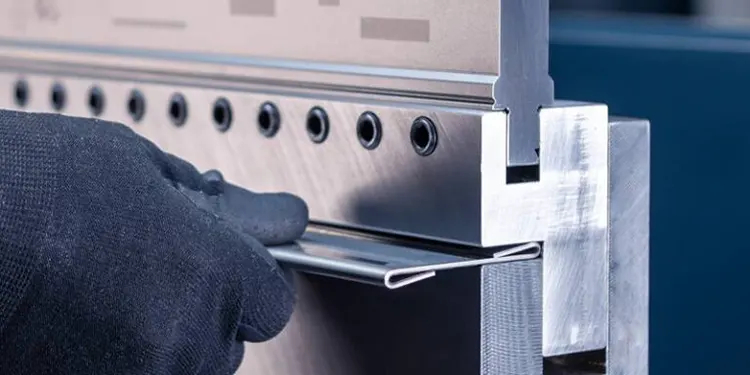
Our sheet metal hemming service relies on a three-step CNC-controlled process. We’ve tweaked this process over years to handle different types of sheet metal—each has its own challenges. We start with pre-bending: we use a CNC bending machine to fold the sheet metal edge to 90 degrees so the material doesn’t crack. This is extra important for harder metals like stainless steel. During this step, our operators set the bending pressure based on how thick the material is and how strong it is. For 1mm-thick aluminum, we use 80–100 bar of pressure—too much and the metal warps. For 2mm-thick cold-rolled steel, we bump pressure up to 120–140 bar to get a clean, consistent fold. Next is main hemming: the machine folds the pre-bent edge further to 180 degrees, wrapping it over itself to make a double layer. Here, we use a special hemming die with a rounded shape. This stops creases or air gaps between the folded layers—air gaps would make the edge weaker and let moisture in, which leads to rust later. The last step is shaping and calibration: we use a flat-faced die to apply gentle, even pressure to the folded edge. This makes sure the edge is flat, smooth, and has no bumps or uneven spots. This three-step process offers far greater control than manual hemming, which can result in inconsistent edge thickness. Our CNC-controlled method ensures uniformity across every part in a production batch.
What distinguishes Difon's sheet metal hemming service?
We adjust the process for each type of material. Different sheet metals act differently during hemming. Aluminum is flexible, but it tends to “spring back”—it tries to go back to its original shape after bending. Stainless steel is strong, but it can crack if you fold it too hard. Cold-rolled steel balances strength and flexibility, but you need to control pressure carefully to avoid scratching it. To ensure optimal results for your specific material, our CNC processes are guided by a predefined set of parameters tailored to its unique properties. For example, when hemming aluminum, we add a “hold time” of 2–3 seconds after the main fold. This lets the material settle and reduces spring back, so the 180-degree edge stays in place. For stainless steel, we heat the edge a little with a small heating tool. This softens the metal just enough to stop cracking without messing up its rust-resistant properties. For cold-rolled steel, we use a die with a Teflon coating. This cuts down on friction between the die and the metal, so we don’t get scratches that need extra polishing. These material-specific process optimizations deliver tangible benefits: enhanced product longevity and reliability in your specific application.
|
Material Type |
Thickness Range (mm) |
Special Treatments |
Target Applications |
|
1008 Cold-Rolled Steel |
0.8–3.0 |
Teflon-coated die (stops scratches) |
Home appliance casings, tool boxes |
|
304 Stainless Steel |
0.5–2.5 |
Localized pre-heating (80–100°C) |
Medical equipment panels, food machinery parts |
|
6061 Aluminum |
0.5–2.0 |
Hold time (reduces spring back) |
Automotive interior trim, electronic device enclosures |
|
Galvanized Steel |
1.0–2.8 |
Low-pressure calibration (protects zinc layer) |
Outdoor furniture frames, electrical junction boxes |
The consistency and quality of your hemmed edges are further ensured by our investment in specialized equipment. Most shops use standard CNC bending dies for hemming, which can make edges uneven—but we’ve invested in custom hemming dies for different edge shapes. There are 1mm-radius rounded hems and flat, flush hems. Each die is made from H13 tool steel, which doesn’t deform even after thousands of hemming cycles. This keeps results consistent for big batches. Our CNC bending machines also have real-time pressure sensors. These sensors check the force used during each hemming step. If the sensor finds pressure that’s too high or too low, the machine stops automatically and alerts the operator. This stops bad parts from being made and cuts down on waste. J"In a recent production run of 500 aluminum automotive trim pieces. The sensor picked up a small pressure spike on the 127th piece—we paused, checked the die for debris, and started again.This prevented the production of defective parts and avoided the need to scrap an entire batch.
Your quality assurance goes beyond dimensional checks to focus on the critical attributes that define a superior hem. Every finished product goes through three key checks. First, we measure the edge thickness with a digital micrometer. We make sure the folded edge is exactly twice the original material’s thickness—like a 1mm aluminum sheet should have a 2mm hemmed edge. The tolerance here is ±0.05mm. A thinner edge would be weaker, so this keeps the structure consistent. Second, we test edge smoothness with a surface roughness meter. We want the hemmed edge to have a roughness value under 0.8μm—this makes sure it’s safe to touch, no cuts. For products like kids’ furniture or medical devices, we even do a “finger test”—a gloved operator runs their finger along the edge to mimic real use. Third, we test rust resistance for stainless steel and galvanized steel parts. We put samples through a 48-hour salt spray test. We need to make sure the hemmed edge doesn’t rust. All inspection data is documented in a detailed quality report provided with each order. This way, you can see exactly how your hemming products perform.
Our commitment extends beyond production—we provide comprehensive support throughout your product lifecycle. If you’re designing a new product, our engineering team gives advice to make hemming easier. For example, we’ll suggest a minimum edge length of 5mm for hemming or tell you to avoid sharp corners near hems. We also do quick prototyping for hemming. If you need one sample to test fit and safety, we can make it in 3–5 business days with our small-batch line. This lets you check the design before you order a lot. Long-term partners can leverage our inventory management programs for high-volume hemmed parts, reducing your carrying costs and ensuring part availability. We store finished parts in our climate-controlled warehouse and ship them to you when you need them. This cuts your inventory costs and makes sure you never run out of parts you need. Our customer service team also knows a lot about hemming. They are equipped to answer technical questions, such as recommended practices for cleaning hemmed edges or addressing minor wear. This level of dedicated technical support is a key differentiator of our service.
Here’s what we believe about sheet metal hemming: it’s a craft that needs both precise engineering and knowing what users need. Our process doesn’t just make smooth edges—it turns regular sheet metal into safer, more durable, and more professional-looking products. Whether you’re building a washing machine, a surgical cart, or car interior trim, that’s what we do. Choosing Difon means partnering with a team dedicated to perfecting the critical details that enhance your product's safety, durability, and market appeal. Want to talk about your specific hemming needs? Ask for a sample of our hemmed products? Come see our facility? Get in touch with our team. You can watch how we make these parts—nothing fancy, just consistent work that turns sheet metal into safe, high-quality pieces that make your final product better.
Hot Tags: Hemming
Related Category
Send Inquiry
Please feel free to give your inquiry in the form below. We will reply you in 24 hours.